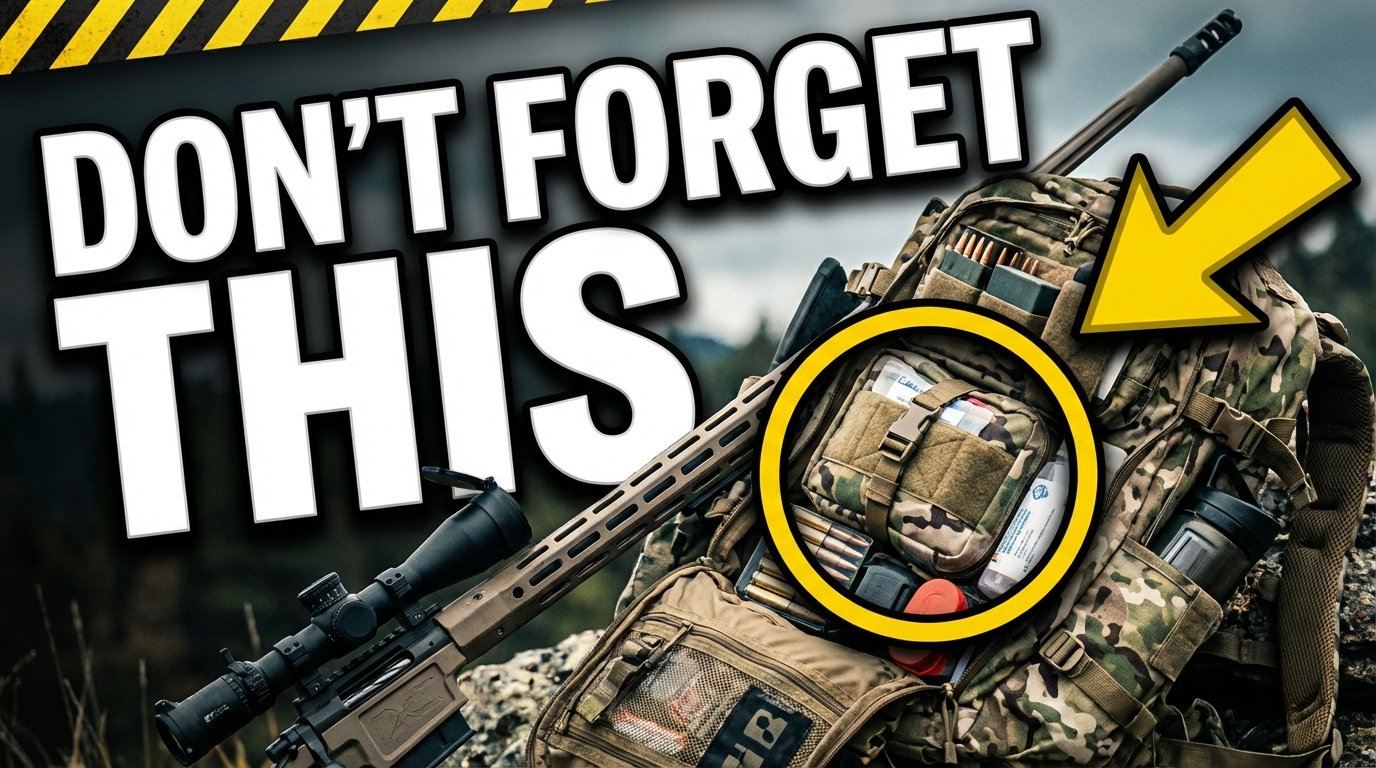
What do the pros actually carry to precision rifle competitions? We sat down with two seasoned competitive shooters to unpack their ruck sacks and reveal every piece of gear they bring to matches, and why it matters.

Why Your Ruck Sack Setup Matters
Whether you’re preparing for your first precision rifle competition or you’re a seasoned competitor looking to optimize your loadout, knowing what to pack in your ruck sack can make the difference between a stress-free match day and a complete disaster.
This isn’t about the rifle itself or the accessories mounted on it, this is purely about the support gear that lives in your backpack. The stuff that keeps you running smoothly through 10+ stages, unpredictable weather, and the inevitable equipment issues that pop up during competition.
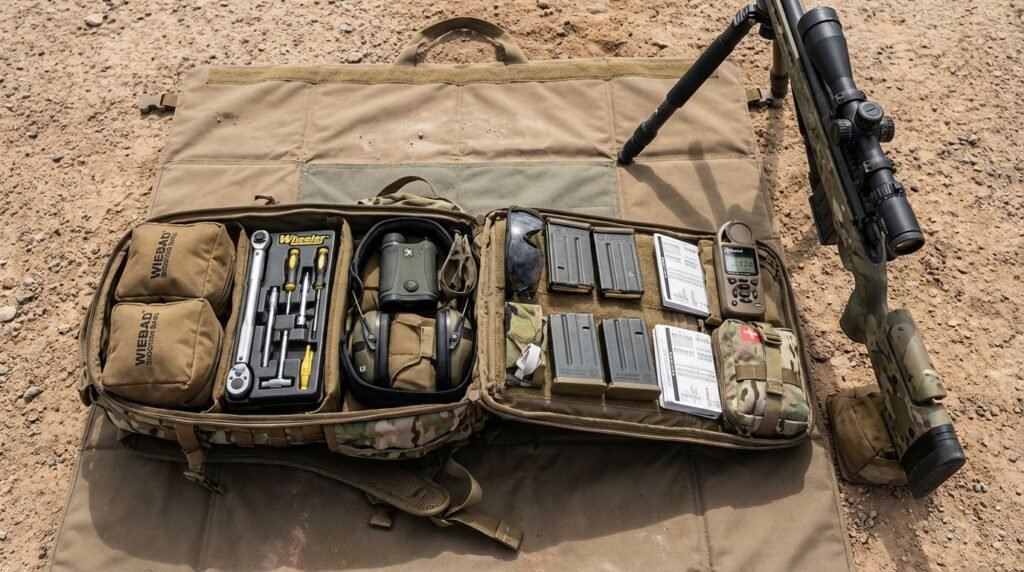
Let’s break down everything competitive shooters keep in their ruck sacks, from life-saving trauma kits to game-changing stability aids.
The Backpack: Choosing Your Foundation
Before we dive into what goes inside, let’s talk about the container itself.
Popular Options:
- Mystery Ranch Komodo Dragon – A larger pack with minimal compartments but tons of space for gear
- 5.11 Tactical Packs – Reliable mid-range option
- Eberlestock – Known for multiple pockets and organization
- Smaller, compact rucks – MOLLE-compatible for custom attachment points
The key is finding something that fits your build, holds everything you need, and doesn’t become a burden when you’re humping it around a match all day. Some shooters prefer one big open compartment, while others want multiple pockets for organization. There’s no wrong answer, just what works for you.
Safety First: The Non-Negotiable Items
Trauma Kit (CRITICAL)
This should be at the top of every shooter’s list. After attending a first responder trauma training session at a match, both shooters emphasized that carrying a proper trauma kit isn’t optional, it’s mandatory.
What’s Inside a Good Trauma Kit:
- Tourniquet (quality matters here)
- Nitrile gloves
- Clotting powder (warning: it burns like crazy when applied, but it works)
- Gauze and pressure bandages
- Medical tape
One shooter keeps a trauma kit in his truck AND carries one on his person at matches. The recent incident at SHOT Show where someone needed immediate tourniquet application after a knife attack drove home just how critical this equipment is.
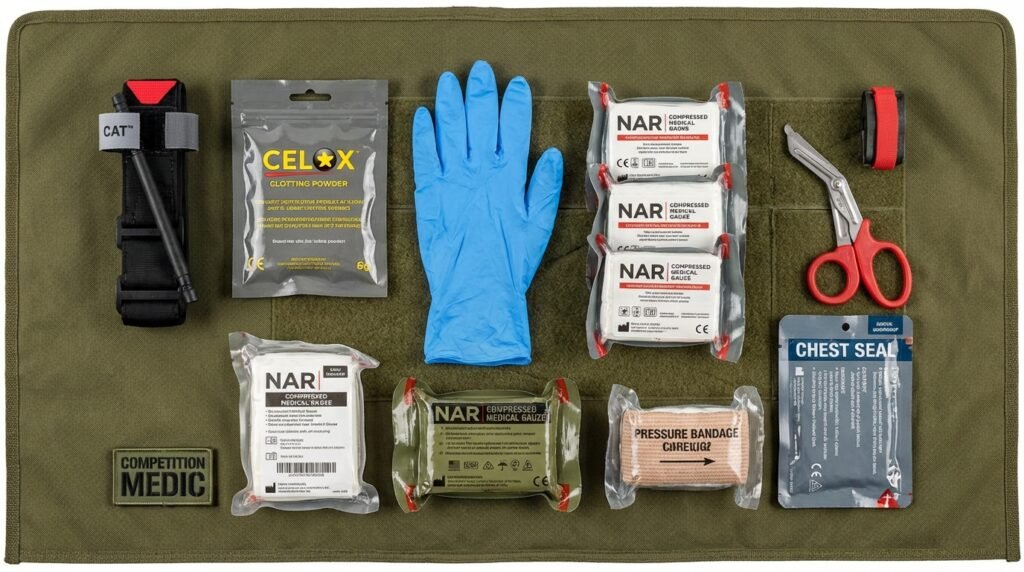
Pro Tip: Consider keeping an EpiPen in your truck’s trauma kit for allergic reactions. You never know when someone might unknowingly eat something they’re allergic to (yes, this actually happened with peanut M&Ms at a match).
Eye and Ear Protection
Safety Glasses: While 99% of long-range rifle shooters admittedly don’t wear eye protection during matches (unlike pistol competitions where it’s mandatory), keeping a quality pair in your bag is smart practice.
When you should absolutely wear them:
- Shooting through tubes or confined spaces
- Stages where muzzle brakes kick up excessive dust and debris
- Any time there’s a significant chance of getting particles in your eyes
One shooter learned this lesson the hard way when a small piece of carbon broke off from a muzzle brake and hit him near the eye while he was RO’ing a stage. That half-inch difference could have been catastrophic.
Quality Options: Pilla or other multi-lens shooting glasses with interchangeable lenses (clear, yellow, purple for different light conditions)
Ear Protection: This is absolutely non-negotiable at every match.
Budget Option: Axil electronic ear protection (~$100) – solid performance without breaking the bank
Premium Option: Wild Ear custom-molded electronic ear protection – these are game-changers. You send in custom molds of your ears, and they create perfectly fitted electronic ear pro that:
- Provides completely natural sound with directional hearing
- Automatically attenuates loud noises
- Can be adjusted for different uses (hunting, shooting, daily wear)
- Some shooters with hearing issues use them instead of hearing aids
- Comes with cleaning kit and hard Pelican-style case
Don’t Forget: Keep spare batteries for electronic ear pro in your kit. Dead batteries = no protection.
Some competitive shooters even double up with both in-ear plugs and over-ear muffs, especially with how ridiculously loud some modern muzzle brakes have become.
Essential Electronics and Data Collection
Kestrel Weather Meter (Nearly Mandatory)
Ask any serious competitor what they can’t live without, and the Kestrel will be near the top of the list.
Recommended Model: Kestrel 5700 Elite with Applied Ballistics
- The “X” version has a faster processor and adjustable Bluetooth strength
- Applied Ballistics integration is what you’re really paying for
- Elite models all include AB software
Storage: Most shooters keep their Kestrel in an Armageddon Gear tripod pouch or a Kydex holster clipped to their tripod for instant access.
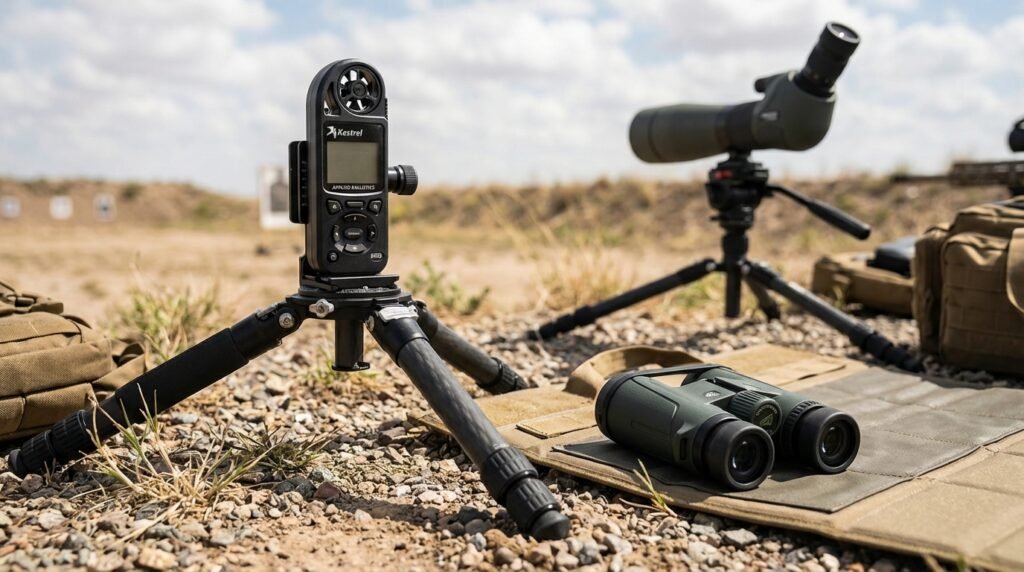
Pro Tip: Personalize your Kestrel with colored panels or laser engraving so you can quickly identify it among the dozens of identical units at every match.
Budget Alternative: While a Kestrel is highly recommended, beginners can get away with a ballistic app on their phone initially. However, you’ll want to upgrade as you get more serious about competition.
Laser Rangefinding Binoculars
This is where competitive shooters start separating themselves from casual range-goers.
Popular Options:
- Vectronix Vector X – Top-tier choice with Area 419 mounting plate
- Sig Sauer Kilo Series – Solid mid-range option (avoid the models with super blue-tinted glass)
- Swarovski EL Range – Excellent glass quality, but the split LED/reticle system between eyes doesn’t work for everyone
What to Look For:
- Bluetooth connectivity to sync with your Kestrel/ballistic solver
- Quality glass that can cut through mirage
- Comfortable eye relief for extended glassing sessions
- Mounting compatibility with your tripod system (Area 419 plates are popular)
Reality Check: There’s a great YouTube video from Area 419 reviewing multiple rangefinding binos, watch it before dropping serious cash. Everyone’s eyes and preferences are different, so what works for one shooter might not work for you.
Spotting Scope (Optional but Helpful)
While not everyone carries one, a quality spotter can make a huge difference.
High-End Example: Leupold Mark V with Badger Ordnance Slick Kit
- Variable magnification (typically 12-40x)
- Reticle for precise spotting
- Can mount laser rangefinder
- Some models work with night vision clip-ons for night shooting
When It’s Useful:
- Burning through mirage on hot days
- Picking up trace on long shots
- Confirming hits on distant steel
- Helping teammates spot during team matches
Binoculars at 10x are usually sufficient, but a spotting scope gives you that extra magnification when conditions demand it.
Garmin Chronograph
The Garmin portable chronograph has become incredibly popular at matches.
Why Carry It:
- Check your velocity mid-match if something feels off
- Verify ammunition consistency
- Troubleshoot pressure/speed issues on the fly
- Help squad mates diagnose problems
There are probably 10+ Garmin chronos at every major match now, so even if you don’t own one, someone will likely let you borrow theirs if needed.
Dope Card System
Every shooter needs a reliable way to track their data during a match.
Budget Solution (Most Popular):
- Masking tape on a small card
- Black Sharpie marker
- Write your dope for each stage
- Simple, effective, and weatherproof enough
One shooter 3D-printed a custom holder with a bungee cord that attaches to the scope. The bungee allows the card to flip away if it hits a barricade, then snap back into place, genius solution to prevent cards from getting snagged or falling out.
High-Tech Solution: Kestrel HUD (Heads-Up Display)
- Interfaces directly with your Kestrel
- Displays dope automatically on a small screen mounted to your scope
- Eliminates writing errors and forgotten data
- Red backlight for night shooting
- Can store multiple target distances for range days
Pros of Kestrel HUD:
- Prevents mistakes (forgetting to write down dope between stages)
- Always have current data
- Great for night vision shooting
Cons:
- Can’t make quick annotations (target order, up/down notes)
- Less common in PRS (most shooters still use the card method)
Alternative: Grease markers on laminated cards (works in rain, but can be messy to erase)
Magazines and Carrying Solutions
Magazines (Minimum Two)
You need at least two magazines for most PRS matches, even though most stages won’t require magazine changes.
Primary Magazine: Your broken-in, perfectly reliable mag that feeds flawlessly every time. This is your “starting lineup” magazine.
Backup Magazine: For stages requiring mag changes or if your primary has issues. Even if it’s not quite as smooth, having a second mag prevents time-consuming single-loading.
Magazine Types:
AI AW/AX/ATX Pattern:
- Hold 10-11 rounds typically
- Some models (like ATX mags) work across multiple rifle platforms
- Premium option: Grey Ops CNC magazines (hold 12 rounds with some cartridges)
- Extremely reliable once broken in
AICS Pattern:
- More affordable
- Wider compatibility
- Typically max out at 10-11 rounds
Note: Some magazine/chassis combinations don’t play well together, verify compatibility before buying expensive mags.
Belt System for Magazine Carry
While not everyone uses a belt, it’s become increasingly popular among competitive shooters.
Recommended: Bison Belt with tech-lock system
- Internal belt threads through your pants’ belt loops
- Velcro attachment allows outer belt to go on/off quickly
- Tech-lock magazine pouches can be swapped between different mag types
- Useful for team matches where you might run pistol mags too
- Easy on/off for getting in trucks between stages
Alternative: Just keep your spare mag in your back pocket. Plenty of successful shooters skip the belt entirely.
Stability and Support Gear
Game Changer Bag (Near-Mandatory)
If there’s one piece of gear that’s absolutely essential, it’s a quality shooting bag.
Most Popular: Armageddon Gear Game Changer
- Becomes absolutely critical for barricade work and odd positions
- Needs to be broken in (like a leather baseball glove)
- Will start leaking at the seams after years of hard use (can be repaired by Armageddon or DIY)
- Many teams get custom logos printed on theirs
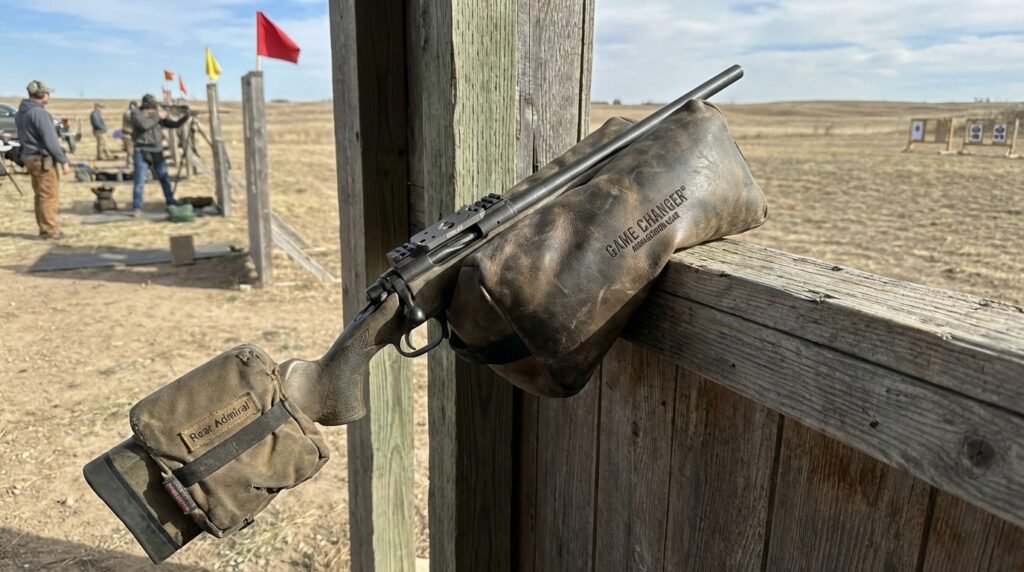
Breaking In Your Bag: Use Otter Wax (fabric wax) to condition and weatherproof your bag:
- Heat the bag slightly (microwave for 20 seconds) to open the fabric
- Rub Otter Wax all over the surface
- Transforms the bag to feel almost like leather
- Creates water resistance
- Adds grip for slippery surfaces
Pro Tip: Bring Otter Wax to matches. If a stage has a particularly slick prop (like a truck bed), you can quickly rub wax on your bag for extra grip.
Alternative: Area 419 bags with built-in strap systems for their plate attachments
Rear Admiral Bag
This Armageddon Gear product is specifically designed for rear tripod shooting.
What It Does:
- Attaches to your rifle’s buttstock
- Provides a stable buffer between the stock and tripod leg
- Makes rear tripod shooting dramatically easier and more stable
- Reduces the skill required for accurate rear-supported shots
With the massive increase in rear tripod stages in modern PRS, this has become nearly indispensable equipment.
Arca Rail Plate Bag System
This is one of the last pieces of gear you should buy (definitely not for beginners), but it’s incredibly useful at matches.
How It Works:
- Weighted bag (or lightweight filler) attaches to an Arca plate
- Plate clips directly onto the Arca rail on your rifle’s forend
- Provides front support on barricades
- Stays attached to your rifle as you move between positions
- Eliminates need to reposition game changer for every shot
Popular Systems:
- Area 419 Arca Plate System – Uses innovative handle system instead of Velcro, comes with sand or lightweight filler options
- Grey Ops Weighted Plate – Solid, reliable system
When to Buy: Only after you’ve competed enough to know you really need the speed advantage. Many successful shooters never use these systems, they’re nice to have but far from essential.
Borrowing Culture: Since these aren’t practice items, it’s common for squad mates to lend them out if you want to try one during a match.
Tripod Accessories
Tripod Center Hub: This small accessory from Trust (available through Mile High Shooting) clips into the center of your tripod and creates a catch-all for:
- Brass collection
- Energy drinks
- Flashlights
- Small gear items
- Can be adjusted on tripod legs to limit how far they spread
Bonus Use: Hang your entire pack from this hub via carabiner to weight down your tripod and prevent wind from blowing it over (and potentially destroying expensive glass).
MPA Tripod Lock: Prevents tripod legs from collapsing when you’re pushing or pulling against them during rear tripod shooting. With the prevalence of rear tripod stages, this tool ensures all three legs stay equally extended and stable.
Tools and Maintenance
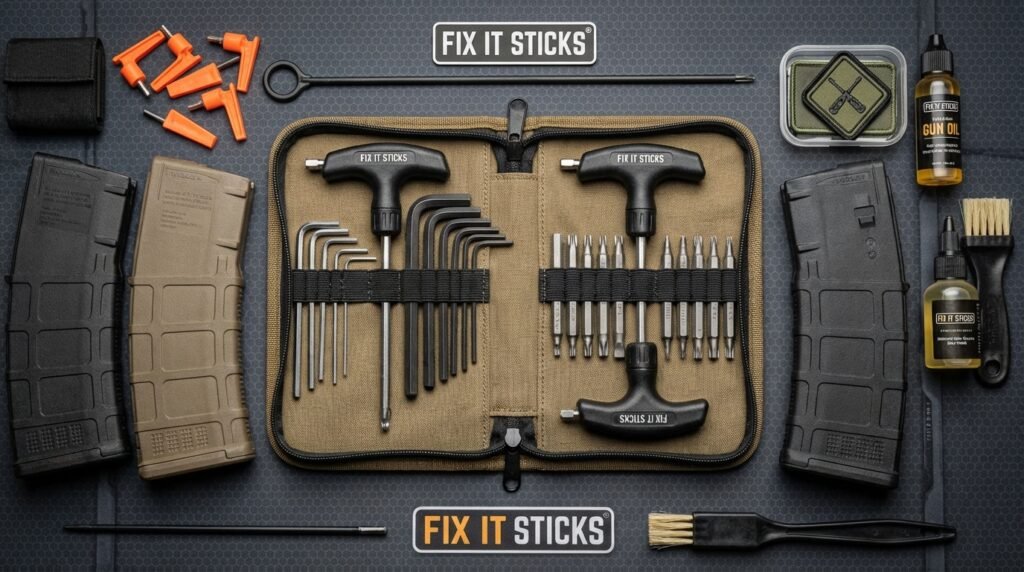
Fix-It Sticks Kit
This compact tool kit is a must-have for any competitor.
What’s Included:
- Multiple Allen key sizes
- Torx (star) bits
- Torque-limiting handles (0-65 inch-pounds)
- Adjustable torque settings for proper scope mounting and action screw tension
Why It’s Essential:
- Fix loose scope rings mid-match
- Help squad mates with equipment issues
- Rezero scopes if needed
- Adjust action screws to spec
- Incredibly compact for the versatility
Alternative Budget Kit: Build your own with:
- Snap-On wrenches (7/16″ or 1/2″ for common scope mount bolts)
- Nightforce scope tool
- Common Allen keys
- Flathead screwdriver
- Electrical tape (the “fix everything” solution)
- Spare batteries (Kestrel, binos, ear pro)
Lens Cleaning Supplies
Microfiber Cloths: Keep quality lens cloths (Leupold makes good ones) for cleaning optics.
Air Blower (Critical for Rain): Instead of wiping water off your lenses (which can damage coatings and smear oil), use a small rubber air blower to blast water droplets off glass. This preserves the hydrophobic coatings on your lenses and prevents scratching.
Why It Matters: Constantly wiping lenses eventually removes protective coatings, causing them to smudge more easily and making them harder to clean over time.
Chamber Flag (Mandatory)
Every match requires chamber flags (typically provided as Empty Chamber Indicators or ECI flags).
Options:
- MDT gives these away with almost every order
- Keep 2-3 extras in your bag for forgetful squad mates
- Costs almost nothing but saves major headaches
Range safety officers will not let you shoot without one, period.
Weather Protection
Rain Gear
The unwritten rule of precision rifle competitions: If you don’t bring rain gear, it WILL rain.
Minimum Kit:
- Lightweight rain pants
- Packable rain jacket
You don’t need expensive gear, cheap, basic rain protection that packs small works fine. Most shooters admit they rarely use it, but the one time you need it and don’t have it will be miserable.
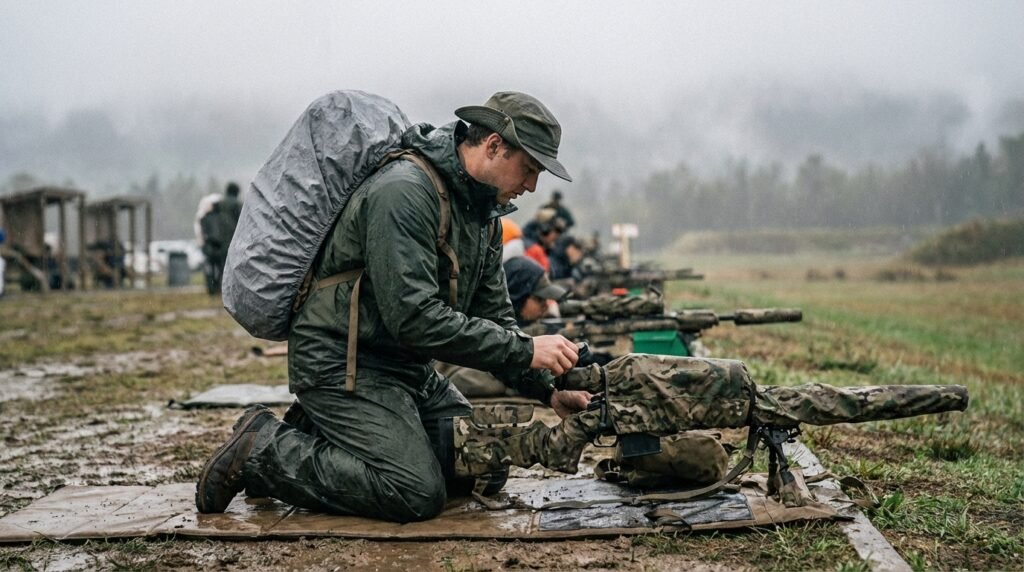
Pack Rain Cover: A waterproof cover for your entire ruck sack prevents your gear from getting soaked and heavy. When paper data books and electronic devices get wet, you’re in for a bad day.
Rifle Rain Cover (“Rifle Condom”): Armageddon Gear and others make covers that quickly unroll over your entire rifle and scope.
When to Use It:
- Heavy downpours (light drizzle usually isn’t worth the hassle)
- Extremely dusty conditions out West
- Muddy environments
Why It Matters:
- Water in your chamber causes hard bolt closes and extraction issues
- Moisture in your trigger can cause malfunctions
- Dust and debris in your action creates reliability problems
Sling (Occasionally Needed)
Reality Check: Most PRS shooters hate offhand/sling stages. They’re rare, difficult, and many competitors (including our featured shooters) openly admit they dump these stages.
Why Carry One Anyway:
- Some matches include sling-supported stages
- If you don’t own one, you’ll be borrowing from squad mates
- Takes minimal space in your pack
Recommended Options:
- Magpul MS4 – Versatile, works great on ARs and precision rifles
- SAP Sling – Purpose-built for heavy precision rifles, best option for proper sling technique
- Tab Gear – Another quality precision rifle sling
Learning Proper Technique: If you come from a military or high-power rifle background, you’ll know how to loop the sling around your arm for bone-on-bone support. For everyone else, it’s worth learning the proper technique, even if you hate the stages. Practice with a lighter AR first to understand the mechanics before moving to a 16-20 pound precision rifle.
Additional Useful Items
Spotting Scope Camera Mount
Allows you to attach your smartphone to your spotting scope for recording through glass, great for reviewing shots and creating content.
Ammo Storage
Ammo Wallets: Area 419 and Armageddon Gear make ammunition wallets that hold 180-200 rounds in an organized, protected format.
Pros:
- Clean, organized ammo transport
- Protection from the elements
- Easy to see how much you have left
Cons:
- Extra step transferring from ammo boxes
- Another thing to keep track of
Alternative: Many shooters just throw their ammo boxes (Alpha Munitions makes nice ones) directly in their truck or pack. It’s simpler and eliminates the extra loading/unloading step.
Brass Collection
Keep a dedicated brass bag or pouch (Armageddon Gear makes one with a carabiner) to collect your fired cases. Don’t be the person leaving brass all over the range—and if you reload, you definitely want to keep your expensive formed cases.
Patches and Personalization
Many shooters collect patches from matches and ranges they’ve attended:
- GTI Training Center
- Altus Shooting Solutions
- 360 Precision
- Various competition sponsors
These tell the story of your competitive journey and make your gear uniquely yours.
What NOT to Buy (Beginner Advice)
If you’re just getting into precision rifle competition, DO NOT feel pressured to buy everything on this list.
Start With These Essentials:
- Rifle and scope (obviously)
- Basic shooting bag (even a sock filled with rice works initially)
- Hearing protection (even foam earplugs work for your first match)
- Safety glasses
- One magazine
- Ballistic app on your phone (free options available)
Borrow or Try Before Buying:
- Rangefinding binos
- Kestrel weather meters
- Game changers
- Tripods
- Spotting scopes
The competitive shooting community is incredibly welcoming. Show up to your first match, tell people you’re new, and you’ll have access to thousands of dollars worth of equipment to try out. Squad mates will happily let you test their gear, answer questions, and help you figure out what works for your style before you spend money.
Buy Smart, Not Fast: After competing for a few months, you’ll understand what YOU actually need versus what looks cool. Different shooters have different priorities, one person’s “must-have” is another’s “never use it.”
The Philosophy: Gear That Works for YOU
Throughout this breakdown, you’ve probably noticed both shooters carry similar categories of gear but often choose different manufacturers or setups. There’s no single “correct” loadout.
Key Principles:
- Safety First: Trauma kit, eye pro, and ear pro are non-negotiable
- Data Collection: You need some way to gather environmental data and calculate ballistics
- Support Gear: Bags and stability aids appropriate for your skill level
- Tools: Basic kit to fix common problems
- Weather Protection: Hope you don’t need it, but bring it anyway
- Everything Else: Nice to have, but match your spending to your commitment level
The Real Secret: The best gear is the gear you’ll actually use and that fits your shooting style. A $100 setup that you understand and practice with will outperform $5,000 worth of equipment you don’t know how to use.
Final Thoughts
Building out your competition ruck sack is a journey, not a destination. You’ll add items, remove things that don’t work for you, upgrade components, and continually refine your loadout based on match experience.
Start simple, borrow extensively, ask questions constantly, and only buy what you’ve determined you actually need. The competitive shooting community is filled with people who want to help you succeed, take advantage of that generosity.
Most importantly, don’t let gear anxiety keep you from competing. Show up with the basics, shoot your match, learn from the experience, and gradually build your kit as your skills and commitment grow.
Now get out there, pack that ruck sack, and go shoot some matches.
Have questions about specific gear mentioned in this article? Drop them in the comments below. Looking to get started in precision rifle competition? Check out local matches in your area, most have beginner-friendly divisions and experienced shooters eager to help newcomers get started.
Don’t forget to subscribe to our newsletter for more competitive shooting content, gear reviews, and match preparation strategies!
Quick Reference Checklist
Safety (Mandatory):
- Trauma kit with tourniquet
- Ear protection + spare batteries
- Safety glasses
- Chamber flag
Data/Electronics:
- Kestrel or ballistic app
- Rangefinding binoculars or rangefinder
- Dope card system
- Spare batteries (all devices)
Shooting Support:
- Game changer or shooting bag
- 2+ magazines
- Ammunition (adequate for match + extras)
- Brass collection bag
Tools/Maintenance:
- Multi-tool kit (Fix-It Sticks or similar)
- Lens cleaning supplies
- Air blower for lenses
- Electrical tape
Weather Protection:
- Rain jacket and pants
- Pack rain cover
- Rifle cover
Optional (But Helpful):
- Tripod accessories (center hub, lock)
- Rear admiral bag
- Arca plate bag system
- Sling
- Chronograph
- Spotting scope
- Belt system for mag carry