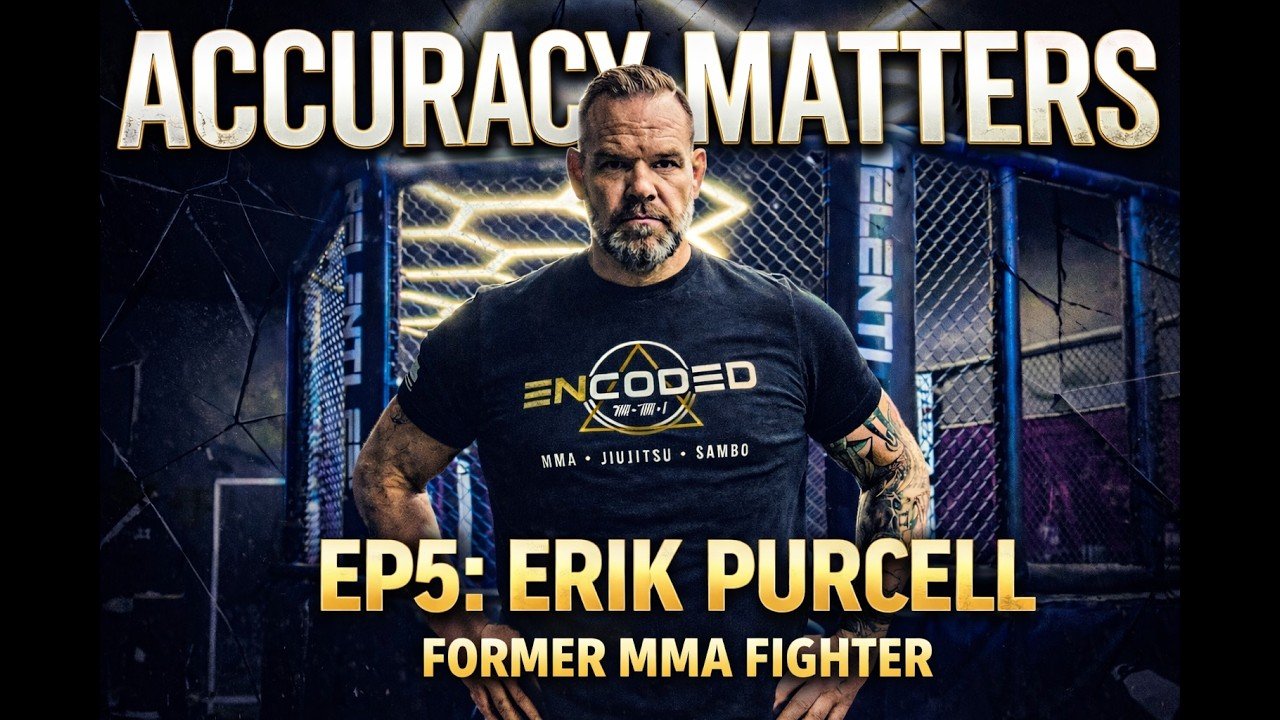
360 Precision sits down with professional MMA fighter and tactical training expert Erik Purcell to discuss the brutal reality of hand-to-hand combat, why most people aren’t prepared for real violence, and how his fighting background translates to firearms training and self-defense.

More Than Just a Fighter
When Erik Purcell isn’t coaching fighters at his gym Encoded MMA or training law enforcement and military personnel in tactical skills, you’ll find him on his off-grid property in Tennessee, fixing frozen pipes, running power lines, and building what will eventually become a fully operational tactical shooting range.
It’s a far cry from the House of Blues in Atlantic City, where he made his professional MMA debut as a co-main event fighter. But for Erik, the journey from regional pro fighter to gym owner to self-sufficient homesteader represents a consistent philosophy: be prepared for anything, depend on no one, and never stop training.
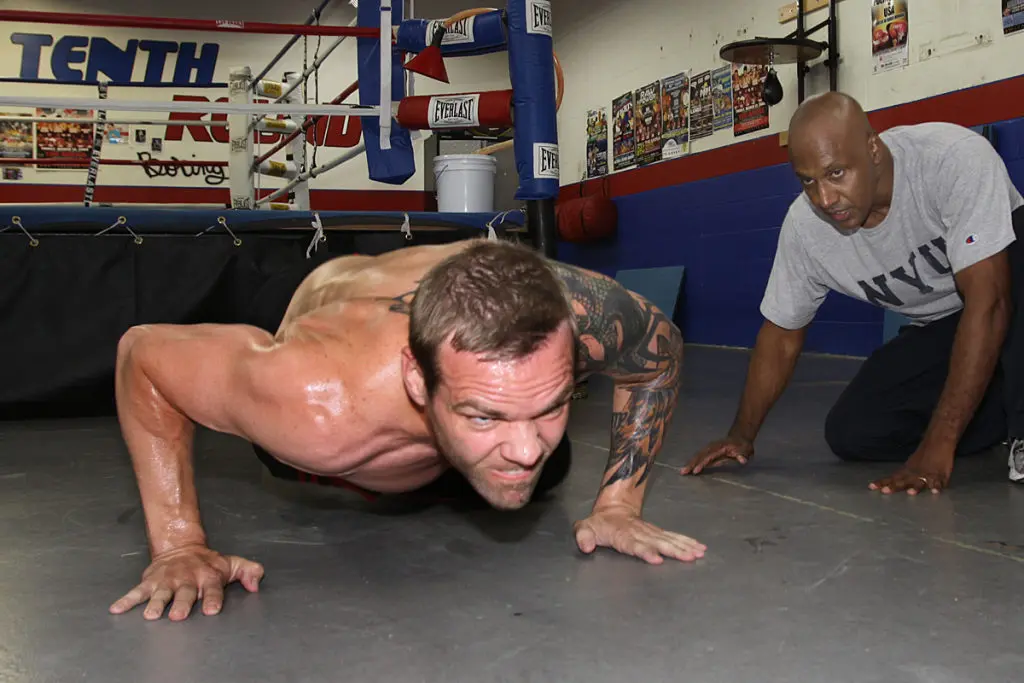
In this exclusive interview with 360 Precision’s Dan Cogan on the Accuracy Matters podcast, Erik opens up about the harsh realities of violence, the crossover skills between MMA and shooting, and why most people, even highly trained individuals, aren’t ready for what a real fight actually looks like.
The Hard Truth About Knife Attacks: You’re Going to Get Cut
The conversation starts in a sobering place: the recent knife attack at SHOT Show 2026 that left a victim bleeding on the floor of the Venetian Convention Center.
“If someone pulls a knife,” Erik states bluntly, “you have two choices: you’re going to get cut, or you run. Just get the hell out. Back away from that.”
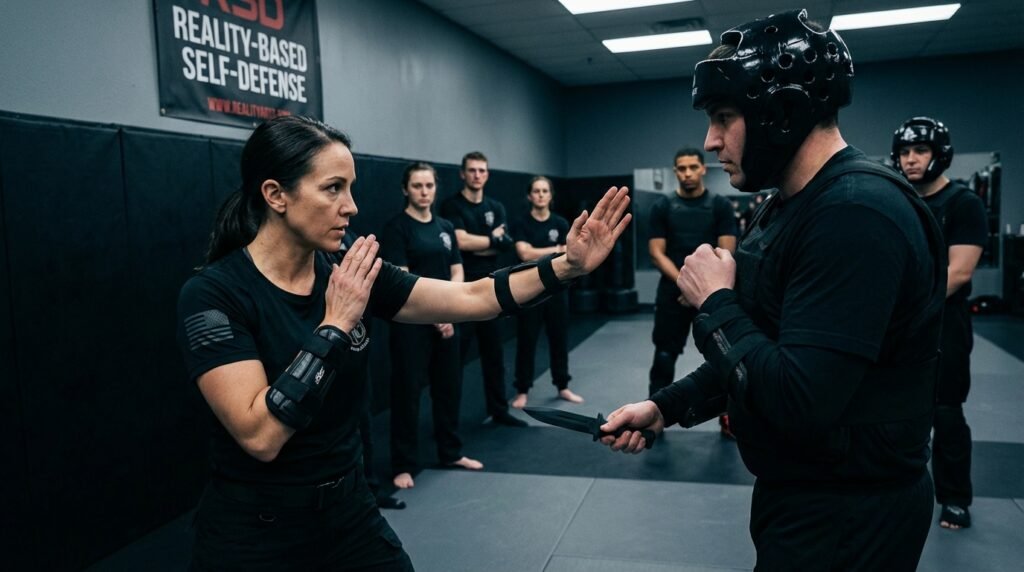
This isn’t theoretical for Erik. He’s trained knife disarmament techniques for years, teaching civilians, law enforcement, and military personnel how to survive edged weapon attacks. And yet, even with all his experience, he’s brutally honest about the odds.
“Knife disarmament is the only training where every time I’m done, I just go, ‘Yeah, I’m still fucked. Good luck,'” he admits with dark humor. “I just hope if someone ever pulls a knife on me, they’re blind in one eye or have a limp or something. I hope they’re not great athletes or very fast.”
Why Knives Are More Dangerous Than People Think
Erik breaks down why knife attacks are so uniquely terrifying:
Physical Reality:
- One cut can be lethal, not multiple stabs, just one well-placed slash
- Arteries are easy to access (neck, inner arms, inner thighs)
- Speed beats technique when someone is committed to violence
- Even trained fighters acknowledge they’re at massive disadvantage
Defensive Strategy:
- Position your hands and arms to protect vital arteries
- Create distance immediately, running is a legitimate survival strategy
- Accept that you WILL get cut if you engage
- Focus on minimizing damage, not winning
“There are ways to position your hands and arms so you don’t take cuts to the arteries,” Erik explains, “but yeah, in every situation you’re just fucked. If you’re lucky, that’s all that happens.”
The lesson? If someone produces a knife, your ego isn’t worth your life. No thank you, sir. We’re done.
For more on realistic self-defense and tactical training, check out our article: SWAT Sniper Reveals What Most Shooters Get Wrong
“Your Friend Would Die”: The Delusion of Untrained Confidence
Erik regularly encounters what he calls “the drunk guy at the bar syndrome”, people who genuinely believe they could beat a professional fighter because they’re tough, they grew up scrappy, or they “know how to handle themselves.”
The Reality Check:
“We get asked these questions a lot,” Erik says. “Someone will text me like, ‘I got a friend here who says he could beat up a pro fighter.’ And I just go, ‘No, your friend would fucking die. Just let them know.'”
It’s not arrogance, it’s mathematics.
The 30-Year Advantage
Erik draws a comparison that puts it in perspective:
“If you have a surgeon who went to medical school, studied for years, spent 10 to 15 years training, or any trade, really, you wouldn’t walk in and say you could do their job better, right?”
“I’ve spent 30 years fighting. That’s my trade.”
The gap between untrained confidence and professional competence in combat sports is massive:
- Years of amateur training before even stepping into your first amateur fight
- Years as an amateur before turning professional
- Ongoing training while working full-time jobs and managing life
- Pressure testing in live competition against people actively trying to hurt you
“Most guys just eventually get burned out,” Erik notes. “I know plenty of people who probably could have been world champions, but life takes over, they get girlfriends, wives, kids. Women have killed more careers than ACL injuries, neck injuries, anything like that.”
(He quickly adds: “And more power to those guys, because realistically, the ladies are probably saving most of them from brain damage.”)
From Art Student to Fighter: An Unlikely Path to the Cage
Erik’s journey into professional fighting wasn’t a childhood dream, it was a pragmatic pivot born out of necessity.
The Epiphany
Originally an art major with aspirations of becoming a touring musician, Erik had a moment of clarity one night while sitting in his dining room with his one-year-old daughter:
“I will never be able to go on tour. Even if I was the one in a million who made it, I have to fight for custody of my daughter. I can’t leave. It’s never going to happen.”
So he asked himself: “What can I do right now that I know I’m good at that I could possibly make a living at?”
The answer? “I’ll become a fighter.”
The Foundation: Wrestling, Sambo, and Basement Jiu-Jitsu
Erik’s combat sports foundation started with wrestling in high school, but his real education began in the late 1990s in Philadelphia:
Philadelphia Sambo (1998-1999):
- Small, brutal gym off Frankford and Cottman
- USA national team training center
- No introductory classes, just “here’s the wolves, good luck”
- First-day experience: “Everyone’s just trying to murder you”
- Training partners who couldn’t wait to “fuck you up”
When the Sambo school closed, Erik and his training partners found a karate school that allowed them to train jiu-jitsu in the basement.
“We were a bunch of animals out of this basement. Fight Club. No easy rounds. Everyone’s just getting their asses kicked.”
They trained out of a binder, literally a three-ring binder with jiu-jitsu techniques, featuring wrestlers in wrestling shoes with mullets. That “Trapper Keeper” was their instructor.
The Bold Move
For his first jiu-jitsu competition in 1999, Erik made a decision that perfectly captures his mentality:
“I went right into black belt. I wanted to see what the guys had.”
He bought a black belt online, showed up to a major tournament, and took third place, losing in the semifinals to Brian Darr, the inventor of the Darce choke.
“Considering we were training out of a karate school basement with no real instructor,” Erik reflects, “we did pretty well.”
The Professional Fighting Career: Shot Out of a Cannon
Erik’s first professional fight was the co-main event at the House of Blues in Atlantic City.
Ironically, just three months earlier, he’d been at that same venue watching Nine Inch Nails, thinking, “One day I’m going to play music on that stage.”
Instead, he found himself in a cage.
The First Fight Reality Check
“I’d never even been in an MMA cage before,” Erik admits. “I didn’t even see the guy I was fighting until I walked out first and he came in after me.”
“The fucking guy was GIANT, big, ripped, muscular. Big Brazilian. I’m fighting at 205 pounds.”
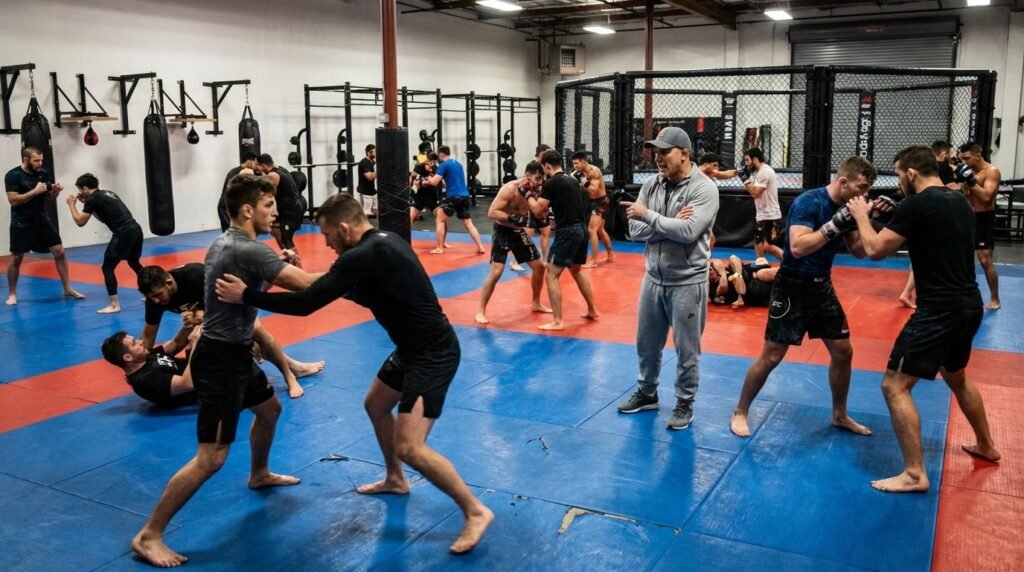
Despite being thrown into the deep end, Erik won the fight and launched what would become a respectable regional pro career.
What Held Him Back
Looking back, Erik identifies two critical mistakes that prevented him from reaching his full potential:
1. Inefficient Training
- Lived in the gym doing non-stop, unfocused workouts
- Lacked scientific approach to weight cutting (nearly killed himself cutting weight like wrestlers did)
- Didn’t have proper coaching structure outside of one exceptional personal trainer (who now trains world boxing champion Jaron “Boots” Ennis and lives in France)
2. Fighting Style
- Fought “like a maniac”, wild, aggressive, all-out from the opening bell
- If he didn’t finish opponents in the first round, he’d gas out
- Lost to fighters he had no business losing to on paper
- Couldn’t manage pace and cardio for later rounds
“I was a pressure fighter, I liked to get on guys right away and push the pace,” Erik explains. “But back then, we didn’t know what we were doing with weight cutting or efficient training. Being able to recover in later rounds, that would have helped me tremendously.”
The Modern Fighter
Interestingly, Erik became a better fighter as he got older. At nearly 50 years old, he competed on the USA Sambo team at the Pan-American Championships in the Dominican Republic and performed well.
“I’m a better fighter at this stage,” he says, “which is kind of weird. I’m just more efficient now. I get in the gym, do what I have to do, get the most peak efficient workouts in the smallest amount of time, and then I get out.”
What Makes a Fighter: It’s Not What You Think
After decades of training fighters at multiple gyms (NPR Endurance and now Encoded MMA), Erik has a unique perspective on what separates contenders from pretenders.
It’s Not Talent
“I see a lot of very talented people coming to the gym,” Erik says. “But talent isn’t the deciding factor.”
It’s Not One Dominant Skill
“In MMA, you need to be well-rounded. You don’t have to be great at any one particular thing. Obviously there’s mental toughness, being able to take a hit, but that’s not enough either.”
It’s Longevity and Life Management
The Real Killers of Fighter Careers:
1. Burnout
- Years of training before even becoming an amateur
- Years in the amateur circuit
- Training full-time while working full-time jobs
- Managing family responsibilities
2. Relationships
- Single fighters living in the gym suddenly get girlfriends
- Girlfriends become wives
- Wives come with kids and responsibilities
- Priorities shift (usually for the better)
“Every time we’ve got this really good fighter and he’s like, ‘Oh, I got a girlfriend,'” Erik laughs, “I’m like, ‘Well, this might be the end.’ But good for you, though.”
The Harsh Reality: To make enough money in MMA to sustain yourself without accumulating brain damage is incredibly difficult. For most fighters, choosing family over fighting is actually the smart, safe choice.
From Fighter to Coach: Building Gyms and Training Warriors
Erik’s transition from active fighter to gym owner wasn’t just a backup plan, it became his true calling.
NPR Endurance to Encoded MMA
Erik previously ran NPR Endurance before launching his current venture, Encoded MMA. The new gym represents a more streamlined operation that allows him flexibility to spend time at his Tennessee property while still coaching fighters and running tactical training programs.
Specialized Tactical Training
Beyond training MMA fighters, Erik developed programs specifically for:
Law Enforcement:
- Hand-to-hand combat for officers
- Handgun disarmament techniques
- AR platform weapon retention
- Reality-based self-defense scenarios
Military Personnel:
- Close-quarters combat
- Weapon transition drills
- Situational awareness training
- Stress inoculation exercises
Civilians:
- Realistic self-defense (not sport jiu-jitsu)
- Knife defense awareness
- Understanding limitations and when to disengage
- Building actual fighting skills, not false confidence
“We teach handgun disarmament, ARs, if someone grabs your rifle, how to reposition it, everything we can possibly train,” Erik explains. “But the knife stuff? That’s the training where I always walk away thinking, ‘Yeah, I’m still fucked.'”
Learn more about preparing for the unexpected: Range Medical: Why Safety Preparedness Matters
The Shooting Connection: Crossover Skills from MMA
One of the most interesting aspects of Erik’s evolution is his integration of firearms training into his skill set, and how his fighting background informs his approach to shooting.
Why Fighters Make Good Shooters
1. Stress Management
- Accustomed to performing under extreme pressure
- Comfortable with physical discomfort and adrenaline
- Can maintain fine motor skills when heart rate elevates
2. Body Awareness
- Understand how to position their bodies for maximum efficiency
- Recognize the importance of proper stance and structure
- Can feel when they’re tense vs. relaxed
3. Repetition and Drilling
- Already conditioned to thousands of reps to build muscle memory
- Understand the value of dry practice
- Know that technique beats strength
4. Realistic Mindset
- No delusions about invincibility
- Understand that preparation ≠ guarantee of success
- Appreciate the value of having multiple tools (hands, knives, guns)
Dry Fire: The Fighter’s Practice Method
Erik is a big advocate of dry fire practice, essentially shadow boxing for shooters.
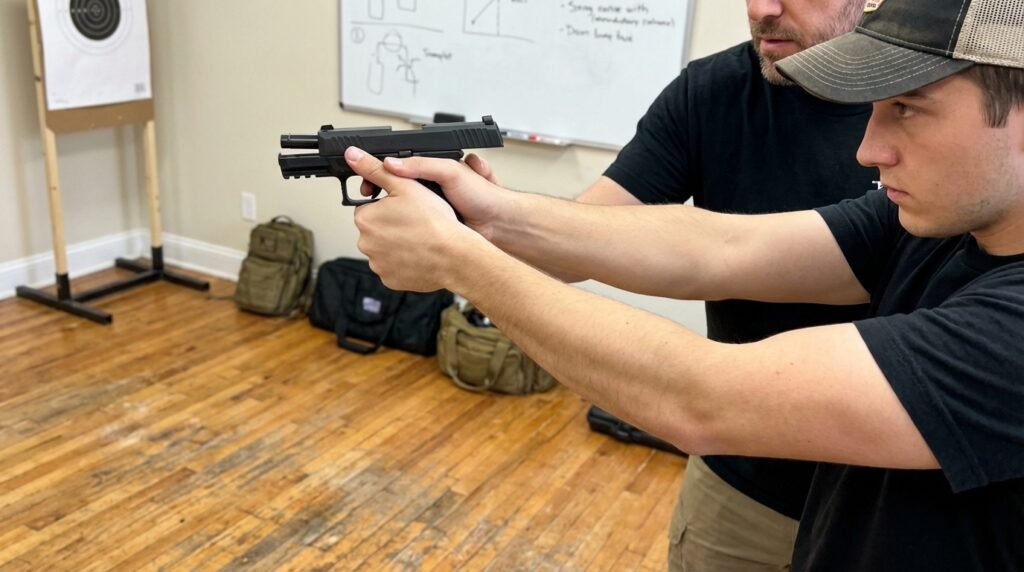
“Dry fire is huge,” he emphasizes. “It’s the same as drilling techniques in MMA. You’re building muscle memory, perfecting your draw, working on trigger control, all without ammo costs or range time.”
His approach:
- Short, focused sessions (quality over quantity)
- Emphasis on perfect repetition
- Integration into daily routine
- Progressive skill-building
Handgun Optics Preferences
During the interview, Erik discussed his preferences for pistol optics, noting the evolution of red dot technology and how it’s changed defensive handgun shooting much like the evolution of MMA changed fighting.
The parallel is clear: technology and training methods evolve, and those who adapt survive.
For more on competitive shooting preparation: The Complete Competitive Shooter’s Ruck Sack Guide
Building the Dream: Off-Grid in Tennessee
While Erik maintains his gym operations and training schedule, his long-term vision centers on his Tennessee property, a true off-grid homestead that will eventually include a tactical shooting range.

The Reality of Off-Grid Living
Erik’s recent trip to Tennessee drove home the challenges of self-sufficient living:
The Frozen Pipe Crisis:
- Temperatures dropped to 10 degrees
- All propane supplies in the area sold out
- Locals’ pipes freezing and bursting everywhere
- Typical Tennessee freeze line isn’t deep enough for extreme cold
Erik’s Preparation:
- Buried water lines 4+ feet deep (3 feet minimum where they hit rock)
- When excavator operators questioned the depth, Erik’s response: “Motherfucker, go down till we hit rock”
- Had to repair frozen pipes inside the cabin anyway
- Every piece of metal was so cold it burned skin on contact
The Lesson: Even with preparation, nature humbles you. Planning for worst-case scenarios isn’t paranoia, it’s survival.
The Work Never Stops
Despite the cold, Erik spent the weekend:
- Hauling saws from the shed to the porch
- Creating a workstation to do cabin repairs
- Fixing damaged plumbing
- Maintaining infrastructure
“It’s really therapeutic for me at this point,” Erik says. “Even if I get down there for a few days at a time, I come back feeling rejuvenated. A little bit beat up, my hands torn up from doing a bunch of work, but rejuvenated.”
The Vision: Solar Power and Shooting Range
Erik’s long-term plans include:
Energy Independence:
- Full solar power system
- Battery storage for reliability
- Propane backup systems
- Complete grid independence
Tactical Shooting Range:
- Multiple shooting positions and distances
- Barricade and positional shooting setups
- Training environment for tactical drills
- Private facility for serious shooters
Sustainable Living:
- Food production capability
- Water independence
- Workshop and tool infrastructure
- True self-sufficiency
The Philosophy: Be Prepared, Be Honest, Be Dangerous
Throughout the interview, several themes emerge that define Erik’s approach to life:
1. Brutal Honesty About Capabilities
Erik doesn’t sugarcoat reality. When someone asks if their untrained friend could beat a pro fighter, he doesn’t hedge. When discussing knife defense, he admits the brutal truth that you’re probably fucked.
Why this matters: False confidence kills people. Understanding your limitations is the first step to addressing them.
2. Multiple Tools for Multiple Threats
Erik’s progression from wrestler to MMA fighter to firearms enthusiast represents a practical philosophy:
“I understand the broad scope of not just having awareness, but limitations and where my bread is buttered. Making sure I’m prepared for any situation as much as you possibly can be.”
Hand-to-hand combat has limits. Knives have limits. Firearms have limits. Understanding all of them makes you harder to kill.
3. Efficiency Over Volume
Modern Erik trains smarter, not harder:
- Focused, efficient workouts
- Maximum results in minimum time
- Recovery and longevity prioritized
- Quality repetitions over exhausting quantity
This applies equally to MMA training, firearms practice, and building infrastructure on his property.
4. Self-Reliance as a Lifestyle
The Tennessee property isn’t a vacation home, it’s a statement of philosophy. When infrastructure fails, when supply chains break, when society hiccups, Erik will be fine.
Not because he’s paranoid. Because he’s prepared.
Lessons for Shooters from the Fighting World
Erik’s unique background offers valuable insights for anyone serious about defensive firearms training:
Lesson 1: Pressure Test Your Skills
In MMA, you can’t fake competence. Someone is actively trying to hurt you, and bad technique fails immediately.
For shooters: Competition, force-on-force training, and realistic scenarios expose weaknesses. Punching paper isn’t enough.
Lesson 2: Accept That Plans Fail
Even elite fighters get caught, make mistakes, and lose fights. Preparedness doesn’t equal invincibility.
For shooters: Have backup plans. Weapon malfunctions happen. Accuracy degrades under stress. Train for failure modes.
Lesson 3: Ego Is Expensive
Erik’s early career losses often came from fighting emotionally instead of strategically, trying to knock people out in the first round instead of pacing himself.
For shooters: The gunfight you walk away from is better than the one you “win.” De-escalation and avoidance aren’t cowardice.
Lesson 4: Basics Never Stop Mattering
At 50 years old, Erik is a better fighter than he was at 25, not because of new secret techniques, but because he executes fundamentals more efficiently.
For shooters: Grip, stance, trigger control, sight alignment. Master the boring basics before chasing advanced tactics.
Lesson 5: Cross-Training Makes You Harder to Kill
Erik doesn’t just train MMA. He shoots. He builds infrastructure. He learns new skills constantly.
For shooters: Don’t just shoot. Train hand-to-hand. Learn medical skills. Develop physical fitness. Build resilience across multiple domains.
The Future: Encoded MMA and Beyond
Erik’s new gym, Encoded MMA, represents both a return to his roots and an evolution of his approach:
Streamlined Operations:
- More efficient business model
- Allows time for Tennessee property development
- Focus on quality instruction over volume
Continued Fighter Development:
- Training the next generation of regional pro fighters
- Building champions from the ground up
- Passing on 30 years of hard-won knowledge
Tactical Training Expansion:
- Growing law enforcement and military programs
- Reality-based civilian self-defense
- Integration of fighting and shooting skills
Personal Evolution:
- Balancing gym ownership with off-grid lifestyle
- Building long-term sustainable income and independence
- Setting an example for self-reliance and continuous improvement
Final Thoughts: The Warrior Lifestyle in 2026
Erik Purcell’s story isn’t about fame or fortune. He’s not a UFC headliner, and his Tennessee property isn’t a luxurious ranch.
It’s about something more important: competence, self-reliance, and honest assessment of reality.
In a world where most people have never been in a real fight, Erik has spent three decades in combat sports. While others talk about what they’d do if someone attacked them, Erik has actually disarmed weapons under pressure. As people worry about power outages, Erik is building a fully off-grid homestead.
The lesson isn’t that everyone should become a professional fighter or move off-grid.
The lesson is that competence comes from time, honesty comes from experience, and self-reliance comes from doing the work.
Whether you’re interested in MMA, tactical firearms training, or just learning from someone who’s put in the decades of work to back up what they say, Erik represents a dying breed: the practitioner who trains in silence, admits his limitations, and simply does the work.
Connect With Erik Purcell
Encoded MMA
- Elite MMA training for fighters at all levels
- Tactical training for law enforcement and military
- Realistic self-defense for civilians
Follow Erik:
- Instagram: https://www.instagram.com/erik_purcell/
- Encoded MMA: https://encodedmma.com/
- Homestead: https://www.youtube.com/@Homesteadlifetennesse
Continue Your Training
Related Articles from 360 Precision:
- SWAT Sniper Reveals What Most Shooters Get Wrong
- Joe Gentile: The Biggest Mistakes New Shooters Make
- Range Medical: Preparedness Matters
- The Complete Competitive Shooter’s Ruck Sack Guide
Subscribe to the Accuracy Matters Podcast: