
Muzzle Brakes
360 Precision muzzle brakes are engineered to reduce felt recoil and eliminate muzzle rise so you stay on target through every shot. Each brake is 100% CNC machined from high-strength steel and designed using advanced port geometry to efficiently redirect expanding gases. The result is flatter shooting, faster follow-ups, and tighter groups. Available for multiple calibers and thread pitches, 360 Precision muzzle brakes are built for shooters who won’t compromise on control or quality.
Showing all 4 results
-
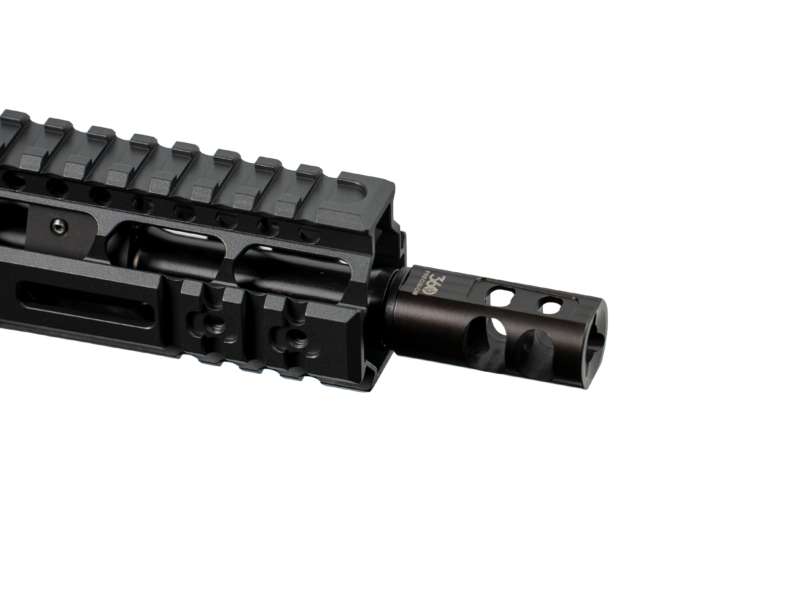
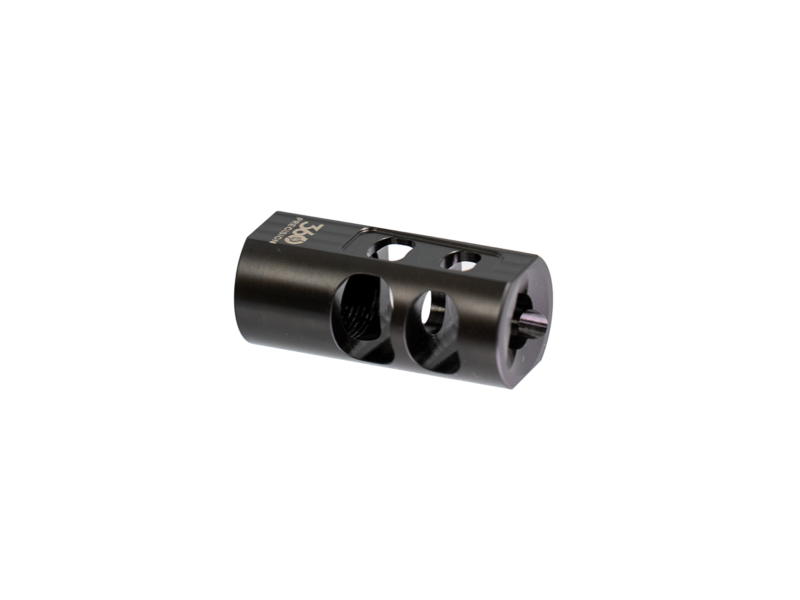
-
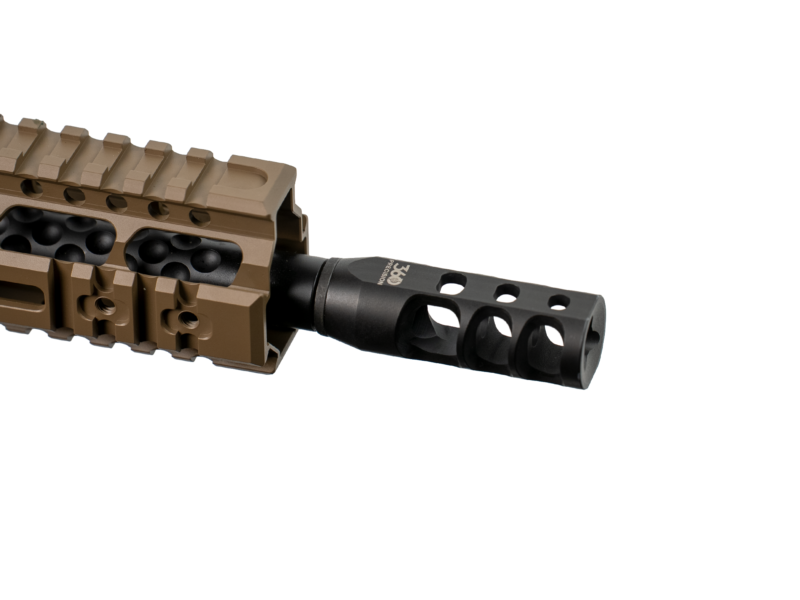
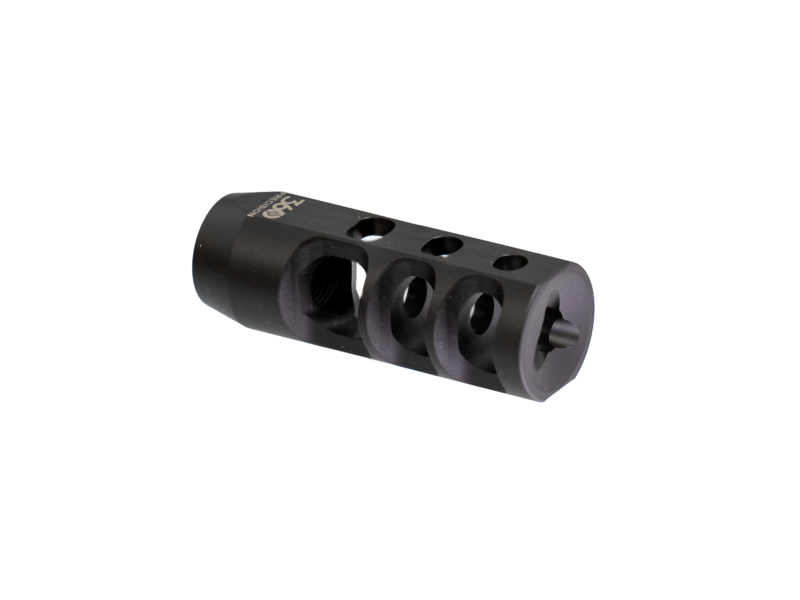
-
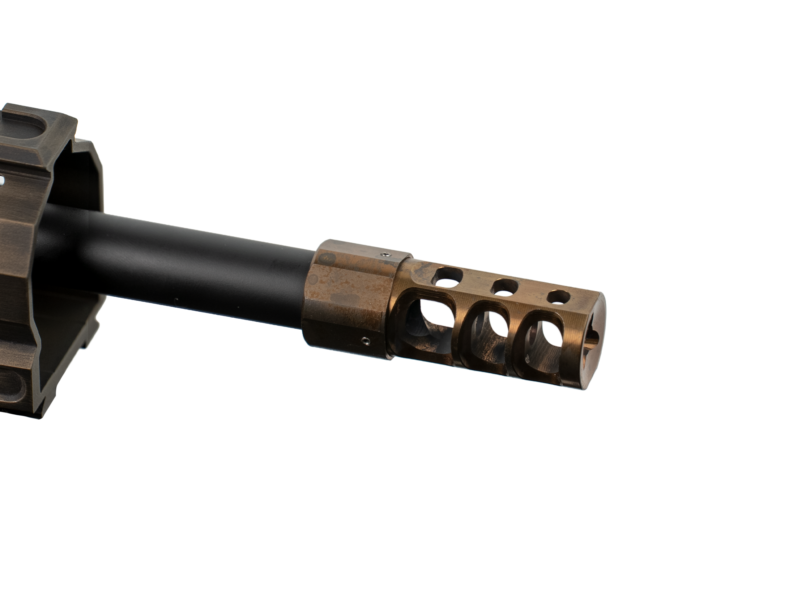
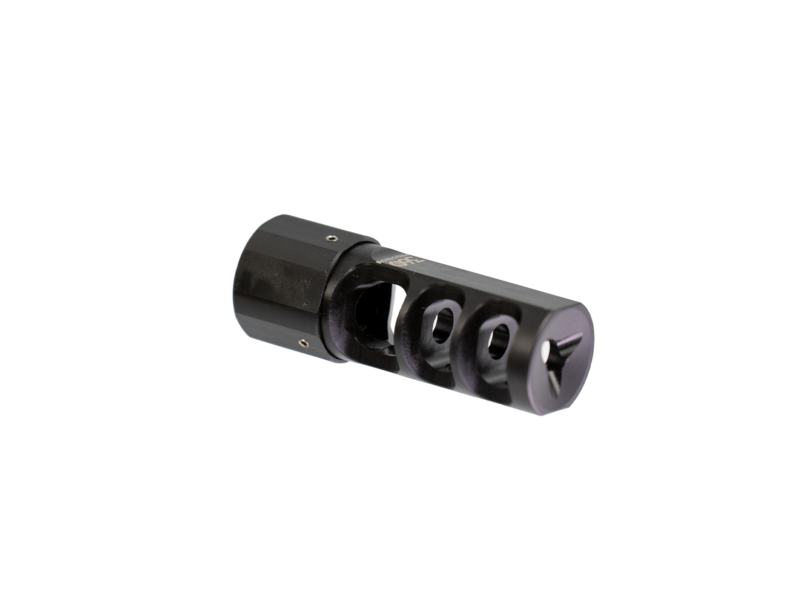 $149.00 Select options This product has multiple variants. The options may be chosen on the product page
 -
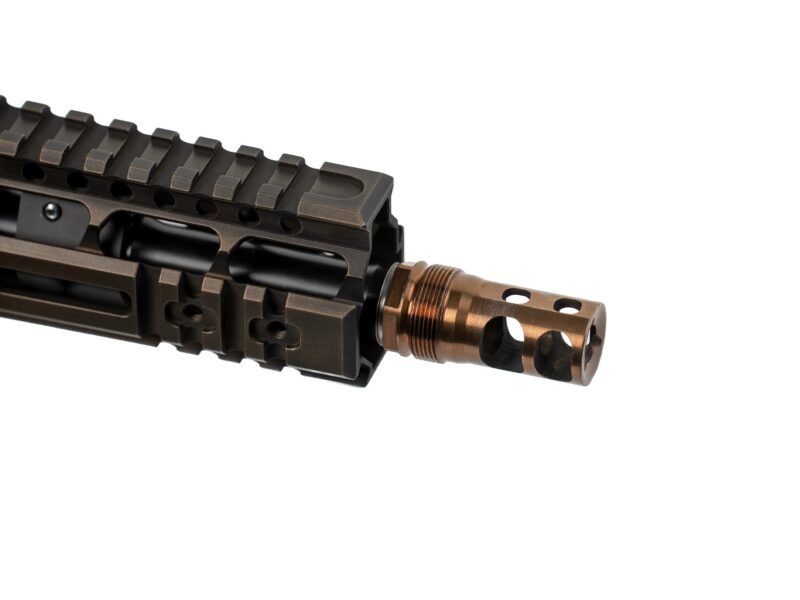
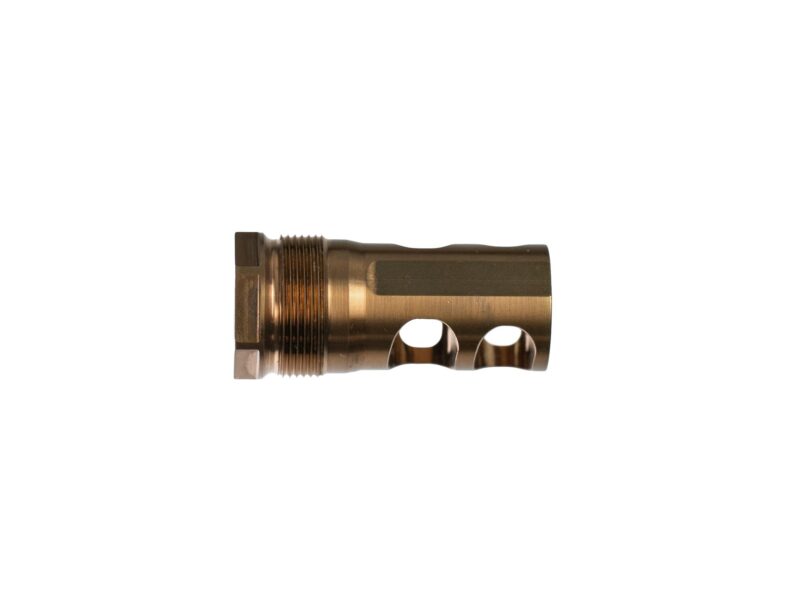
Showing all 4 results
CNC Muzzle Brakes for AR-15 Rifles and Pistols
Every muzzle brake in this lineup is CNC machined from 17-4PH stainless steel and engineered with precision port geometry to redirect propellant gases away from the shooter, reducing felt recoil and keeping the muzzle flat for faster follow-up shots. These are the same brakes we install on our own rifles before they leave the shop.
Muzzle brakes work by venting gas through angled ports as the bullet exits the barrel. The direction, size, and spacing of those ports determine how much recoil gets absorbed and how much muzzle rise gets cancelled. We designed ours using fluid-flow modeling to optimize gas redirection for each caliber, not by copying port patterns from generic designs.
Available for .300 Blackout (5/8×24 thread) and 5.56/.223 (1/2×28 thread). If you are not sure which thread pitch your barrel uses, .300 Blackout barrels are almost always 5/8×24 and .223/5.56 barrels are almost always 1/2×28.
What a muzzle brake does (and what it does not do)
A muzzle brake reduces felt recoil and muzzle rise. On a 5.56 AR-15, the recoil is already manageable, but a good brake makes it nearly flat, which matters most during rapid-fire strings, competition stages, and training drills where you need to get back on target between shots. On a .300 Blackout with supersonic ammunition, the difference is more dramatic because the cartridge produces more recoil energy in a short, light package.
A muzzle brake does not reduce sound. It redirects gas sideways, which actually increases the perceived concussion for anyone standing next to the shooter. If sound reduction is your priority, a suppressor or a flash hider is the better choice. If recoil reduction and shot-to-shot speed are your priorities, a muzzle brake is the right tool.
Muzzle brake vs compensator vs flash hider
These three devices are often confused, and some muzzle devices combine features of more than one type. Here is the short version:
- A muzzle brake vents gas sideways (and sometimes rearward) to counteract the rearward recoil impulse. Its primary job is reducing felt recoil. It is the most effective device for keeping the rifle from pushing back into your shoulder.
- A compensator vents gas upward to counteract muzzle rise. Its primary job is keeping the barrel from climbing after each shot. Some compensators also reduce recoil, but their main focus is vertical muzzle control.
- A flash hider disperses unburned propellant gas to reduce the visible muzzle flash. Its primary job is preserving the shooter’s night vision and reducing their visual signature. It does very little for recoil or muzzle rise.
Many modern muzzle devices (including ours) are hybrid designs that combine brake and compensator functions. The ports are angled to reduce both rearward recoil and upward muzzle rise simultaneously.
Why 17-4PH stainless steel?
17-4PH is a precipitation-hardened stainless steel used in aerospace, medical, and high-performance firearms applications. It is significantly harder and more corrosion-resistant than mild steel or standard 4140 chrome moly, which means it holds up to the extreme heat, pressure, and carbon fouling that muzzle devices endure with every round fired.
Most budget muzzle brakes are machined from mild steel or aluminum and coated with black oxide or phosphate to resist corrosion. Those coatings wear off over time, especially in the high-heat environment at the muzzle. 17-4PH resists corrosion at the material level, not just at the surface. It is harder to machine (which is why budget brakes do not use it), but it produces a more durable, longer-lasting device.
Which brake goes on which 360 Precision rifle?
If you are buying a complete rifle or complete upper from us, a muzzle device is already installed. Here is what ships on each model:
- Demon Rifle: 360 Precision Vector-ST – 3 Port Anti-Recoil Self-Timing Muzzle Break/Compensator
- Bandit 300 BLK Pistol and SBR: 360 Precision APEX 2-Port Muzzle Break – 30 cal.
- Recon Rifle: 360 Precision Vector-3 Muzzle Break
- Evolution Competition Rifle: Fortis RED Brake – 5.56mm Nitride Finish
- BR1 Rifle: 360 Precision Vector-3 Muzzle Break
- Recon CQB Pistol: 360 Precision Vector-3 Muzzle Break
The muzzle brakes listed in this category are available as standalone accessories for builders, for upgrading an existing rifle, or as replacements. All use standard AR-15 thread pitches and install with a standard armorer’s wrench.
Frequently Asked Questions About Muzzle Brakes
What does a muzzle brake actually do?
A muzzle brake reduces felt recoil and muzzle rise by redirecting the expanding gases that exit the barrel after a round is fired. Instead of all that energy pushing straight back into your shoulder and flipping the muzzle upward, the ports on the brake vent those gases outward, creating a counterforce that keeps the rifle flatter and more controllable.
How much recoil does a muzzle brake reduce?
It depends on the caliber, barrel length, ammunition, and the design of the brake itself. A well-engineered muzzle brake can reduce felt recoil anywhere from 30% to over 50%. Higher-recoiling calibers tend to see the most dramatic improvement. On a .308 or .300 Win Mag, the difference is immediately noticeable. On a .300 Blackout SBR or AR pistol, a good brake transforms the shooting experience.
What is the difference between a muzzle brake, a compensator, and a flash hider?
These three devices all thread onto the muzzle of a barrel, but they serve different purposes. A muzzle brake primarily reduces felt recoil by redirecting gases sideways or slightly rearward. A compensator primarily reduces muzzle rise by venting gases upward. A flash hider reduces the visible flash at the muzzle, which is useful in low-light conditions. Some devices combine two or more of these functions, but a dedicated muzzle brake will outperform a hybrid device when recoil reduction is the priority.
Will a muzzle brake make my rifle louder?
A muzzle brake does not increase the total decibel output of the rifle. What it does is redirect the sound and concussive blast to the sides and slightly rearward instead of sending it all downrange. This means the perceived noise level for the shooter and anyone standing nearby will be noticeably higher. Quality hearing protection is always recommended, and it becomes especially important when shooting with a brake.
Do muzzle brakes affect accuracy?
A properly machined and correctly installed muzzle brake will not hurt accuracy. In many cases, shooters report improved practical accuracy because the reduced recoil eliminates flinch and lets them execute a cleaner trigger pull. Adding a brake will change barrel harmonics, which means your point of impact may shift. If you’re doing precision load development, it’s best to develop your load with the brake installed rather than adding it after the fact.
How do I know which muzzle brake fits my rifle?
Muzzle brakes must match your barrel’s thread pitch and caliber. The two most common thread pitches on AR-platform rifles are 1/2×28 (standard for .223/5.56 barrels) and 5/8×24 (standard for .30 caliber barrels including .300 Blackout and .308 Winchester). Always verify your barrel’s thread pitch and caliber before ordering. Every 360 Precision muzzle brake lists the compatible thread pitch and caliber in the product specifications.
What is muzzle brake timing and why does it matter?
Timing refers to the rotational alignment of the brake’s ports when it’s fully tightened onto the barrel. For brakes with asymmetrical port designs, like those with a solid bottom to prevent dust kick-up when shooting prone, proper timing ensures the ports are oriented correctly. Most brakes are timed using a crush washer or shim kit. A properly timed brake ensures optimal performance and consistent point of impact.
Do I need a gunsmith to install a muzzle brake?
For most threaded barrels with a standard thread pitch, installing a muzzle brake is straightforward. You thread the brake onto the barrel, time it using the included crush washer, and torque it to the correct specification. That said, if you’re unfamiliar with the process or want to ensure perfect alignment, having a qualified gunsmith handle the installation is never a bad idea.
Do I need an FFL to buy a muzzle brake?
No. Muzzle brakes are classified as firearm accessories, not firearms. No FFL transfer, background check, or tax stamp is required to purchase a muzzle brake. They ship directly to your door.
Are muzzle brakes legal in all 50 states?
Muzzle brakes are legal in all 50 states. Some states restrict other muzzle devices like flash hiders (California, for example), but muzzle brakes themselves are not subject to the same restrictions. It is always the buyer’s responsibility to verify compliance with local and state laws before purchasing any firearm accessory.
How do I clean and maintain a muzzle brake?
Carbon buildup inside the brake ports is normal. Periodically remove the brake and clean the ports with a brush and powder solvent, or soak it in an ultrasonic cleaner. Keep the barrel threads lightly greased with an anti-seize compound or choke tube lubricant so the brake doesn’t seize onto the barrel over time. Recheck timing after reinstallation.
