There’s no shortage of firearms content on the internet. But a lot of it either skims the surface or buries the useful information under a pile of gear reviews and affiliate links. What most shooters actually want is simple: a straight answer from someone who knows what they’re talking about. In this article, an expert gunsmith answers your firearms questions about calibers, cleaning, muzzle brakes, and suppressors.
That’s exactly what this episode delivers. We sat down and worked through real questions submitted by viewers – the kind of questions that come up when you’re standing at the gun counter, or when you’ve just bought a new piece of gear and you’re not sure if it’s going to work with what you already own.
Four questions. Four real answers. Let’s get into it.

Question 1: What Does “Multi-Caliber” Actually Mean on an AR Lower?
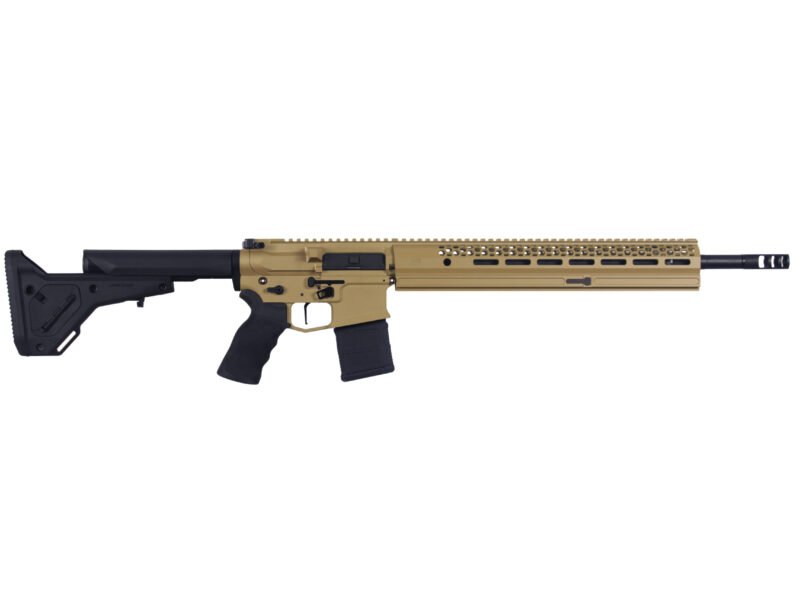
If you’ve spent any time shopping for AR lowers, you’ve seen this marking. It shows up on stripped lowers, complete lowers, even some serialized pistol frames. “Multi-caliber” or “multi-cal” stamped right into the metal.
So what does it actually mean?
The short answer: it means the manufacturer is not restricting that lower to a single specific caliber. It’s a legal and commercial designation as much as a technical one. An AR-pattern lower receiver is a standardized part – the upper receiver, barrel, and bolt carrier group are what determine what caliber the firearm actually fires. The lower, by itself, doesn’t chamber a round. It houses the fire control group, the buffer system, and accepts the magazine.
By marking it “multi-caliber,” the manufacturer is acknowledging what is already mechanically true: that same lower can be paired with a 5.56 upper, a 300 Blackout upper, a .224 Valkyrie upper, or any number of other configurations that share the standard AR lower interface.
From a practical standpoint, if you’re building an AR and you see a lower marked “multi-cal,” don’t overthink it. It’s not a red flag. It’s not a sign of a cheap or cut-corner part. It’s simply the manufacturer covering the full range of legitimate use cases for that receiver.
Where it matters more is on the paperwork side. When you fill out a 4473, you list the caliber of the firearm. For a stripped lower that is genuinely multi-caliber, there are established ways to handle that – your dealer will walk you through it. The key takeaway is that the “multi-caliber” designation is there to reflect the actual versatility of the AR platform, not to obscure anything.
Question 2: How Often Should You Actually Clean Your Firearm?
This is one of those questions that sounds simple but has a real answer that depends on several factors most people don’t think about. The honest response is: it depends – but not in a cop-out way. There are actual variables that should drive your cleaning schedule, and understanding them makes you a better gun owner.
It Depends on How You Use the Gun
A concealed carry firearm and a hunting rifle that comes out twice a year are not the same situation.
If you’re carrying a gun every day for self-defense, you should be cleaning it regularly – after every range session at minimum. The reason is simple: your life may depend on that gun functioning flawlessly on demand. Fouling, carbon buildup, and debris accumulation are all enemies of reliability. You need to know that gun is going to run.
“If it’s a concealed carry gun, I’m cleaning it after every time I use it because I need to trust that firearm with my life and make sure it is going to function properly every time I use it.”
For a hunting rifle that lives in the safe most of the year, the cadence is different – but the inspection habit should be the same. Pull it out, look it over, and make sure it’s in good shape. Even if you haven’t fired it, wipe it down and run an oiled patch through the bore before you put it away after hunting season.
The Ammunition You Shoot Matters More Than You Think
This is a point that catches a lot of people off guard. “Dirty” ammunition doesn’t mean cheap ammunition. It means ammunition that produces more fouling – more unburned powder residue, more carbon, more particulate matter left behind in the action and bore. Some premium ammunition runs cleaner than some mid-range options. Some steel-cased budget ammo fouls a gun significantly faster than brass-cased alternatives.
If you’re shooting a lot of volume and your gun is getting dirtier faster than expected, the ammo is worth looking at as a variable.
Suppressors Change the Equation
Running a suppressor means more gas is redirected back through the action rather than expelled out the muzzle. That blowback carries carbon with it – into the bolt, the bolt carrier, the upper receiver, and in the case of a pistol, back through the slide and into the action.
A suppressed gun will foul faster than an unsuppressed gun firing the same ammunition. If you run a can, your cleaning intervals need to reflect that. This is especially true with pistol caliber suppressors and with direct impingement semi-auto rifles. You’ll see it in the carbon deposits that build up around the gas port and inside the carrier.
The Baseline Rule: Inspect, Then Decide
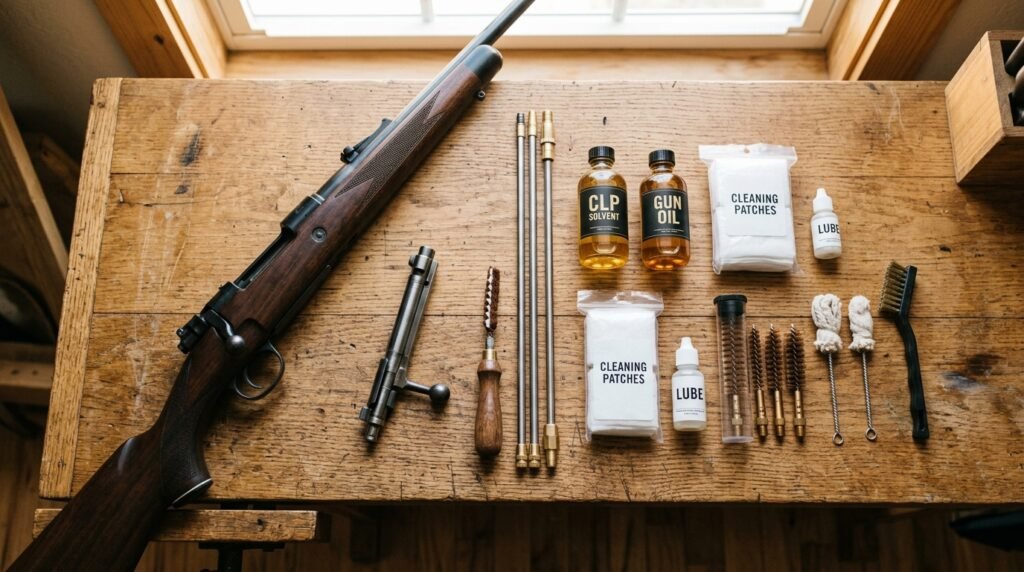
Rather than setting a hard round-count rule, the smarter habit is inspection. Pull the bolt. Look at the bolt face, the locking lugs, and the carrier. Check the bore. If things look fouled, clean them. If they look good and the gun has been sitting, at minimum wipe it down and make sure it’s lubricated before putting it back.
“It can be as simple as just wipe it down. Pull the bolt out. Wipe the bolt down. Just clean it off. And then you always want to make sure that you lubricate before storing it.”
One point that often gets overlooked: stainless steel barrels still need oil. Stainless is corrosion-resistant, not corrosion-proof. Pit marks and surface corrosion can develop inside a stainless bore if it’s stored dry, and that will affect your accuracy over time. Always run an oiled patch down the bore before long-term storage.
For a deeper look at what fouling and wear actually do inside a barrel over time, our article on what a worn barrel actually does to your accuracy – where we cut one open to show you exactly what happens – covers this in detail.
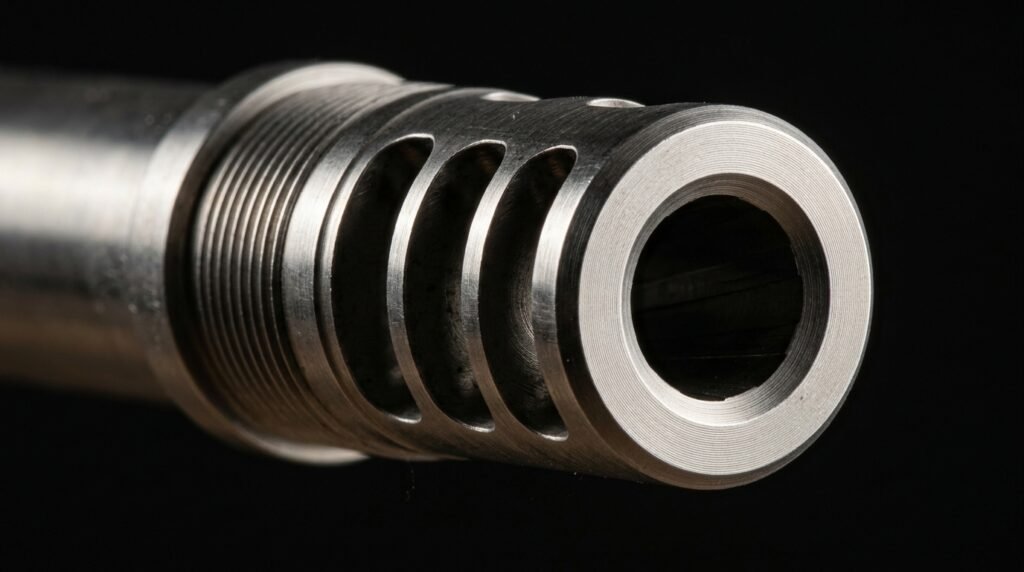
Question 3: Will a 30 Cal Muzzle Brake Work on a 6.5 Creedmoor?
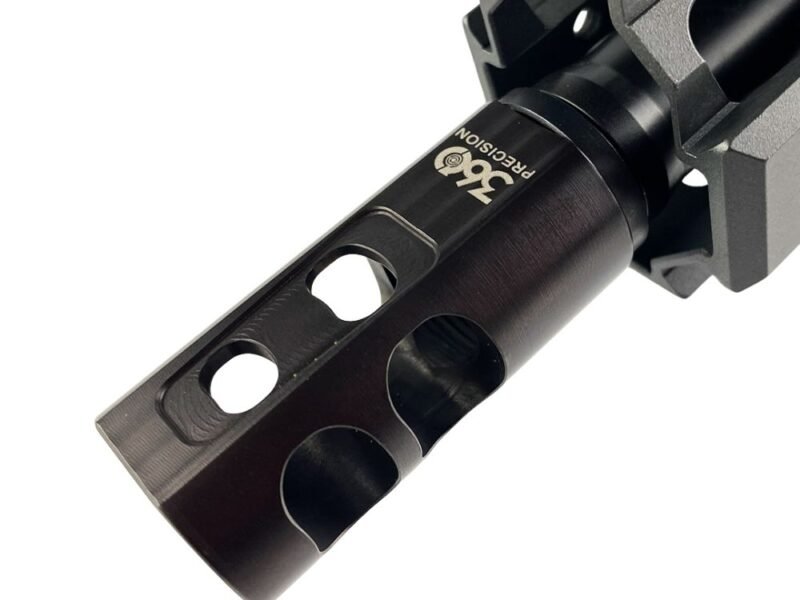
This question comes up constantly, and it makes sense – muzzle brakes are specific to thread pitch and bore diameter, and if you already own a quality 30 cal brake, it’s a reasonable thing to wonder whether it’ll work on a 6.5 build.
The short answer is yes, it will work. And here’s why.
Understanding What “30 Cal” Actually Means
When a muzzle brake is designated as “30 cal,” that refers to the caliber it was designed for – specifically, projectiles with a .308-inch diameter. That’s the bullet diameter for .308 Winchester, .30-06, .300 Win Mag, and other 30-caliber cartridges.
The 6.5 Creedmoor fires a projectile with a diameter of approximately .264 inches. That’s smaller than .308. So the bore of a 30 cal brake – which is machined to .308 plus some clearance tolerance – is going to be larger than the 6.5 projectile passing through it.
As long as the projectile is smaller than the bore of the muzzle device, it’s safe.
The Clearance Tolerance Detail
Here’s where it gets a little more precise. A muzzle brake designated as “30 cal” doesn’t have a bore that’s exactly .308 inches. Manufacturers build in clearance – typically the actual bore measures somewhere around .350 inches, sometimes a bit more or less depending on the manufacturer. That clearance is what makes the brake safe to use across multiple calibers below the rated maximum.
“If you were to measure a 30 cal brake, that does not mean it’s .308 inches in its bore. It’s going to be .340 at minimum, probably around .350.”
So a 6.5 Creedmoor projectile at .264 inches has plenty of clearance through a .350-inch bore. The brake will work. It may not be as optimally tuned for 6.5 as a caliber-specific 6.5 brake would be – the port geometry is designed around the gas volume of a 30 cal round – but it will still reduce muzzle rise and recoil effectively.
What You Should Never Do
The flip side of this rule is equally important: never run a larger caliber through a muzzle device than it’s rated for. If a brake is rated for 30 cal and you try to push a .338 Lapua through it, you don’t have enough clearance. The projectile may contact the bore of the brake, and the results range from a destroyed brake to a catastrophic failure.
“Don’t take a .338 and shoot it through that. That’s not what the manufacturer has specified for. They haven’t allowed for enough clearance.”
The rule is simple: you can go smaller, you cannot go larger. Always stay at or below the caliber the device is rated for.
This same principle extends to thread pitch – make sure the brake is threaded to match your barrel’s muzzle threads. A 30 cal bore won’t help you if the threading doesn’t match.
Question 4: How Do You Choose the Right Suppressor?
Suppressor selection is where most people get into trouble – not because it’s complicated, but because they skip the questions that need to be answered before any purchase decision is made. Walk into a dealer with “I want a suppressor” and no other information, and you might walk out with something that doesn’t fit your actual use case.
Here’s the framework for thinking through it correctly.
Question One: What Caliber Are You Shooting?
This is always the first question. Not “what brand do you like” or “what’s the best suppressor” – what caliber are you running?
Just like with a muzzle brake, suppressors have a maximum caliber rating. A suppressor rated for .30 cal can technically run smaller calibers through it – 5.56, .224, 6.5, and so on – because the bore is sized for the largest rated caliber. But you need to establish that ceiling first.
If you’re planning to move one suppressor between multiple rifles in different calibers, the answer is straightforward: buy a suppressor rated for the largest caliber you plan to shoot through it. Everything smaller will work. Nothing larger should be attempted.
“We want to know what calibers do we plan on shooting through this so that we know that we’re getting a suppressor that will support the largest caliber we plan on shooting through it.”
Question Two: What Firearm Type Is It Going On?
This matters more than most people expect. There are suppressors designed specifically for bolt-action rifles, suppressors designed for semi-automatic rifles, and suppressors designed for pistols. Some suppressors work across multiple platforms, but not all of them do.
The reason comes down to gas pressure and back-pressure. A semi-automatic action cycles on gas. When you add a suppressor, that gas system has to be compatible with the additional back-pressure the suppressor creates. A suppressor that works perfectly on a bolt gun may cause cycling issues on a gas-operated semi-auto – or vice versa. Some suppressors are specifically designed to handle the pressure demands of pistol calibers with their shorter dwell times and higher port pressures.
Know what you’re putting it on before you buy.
Question Three: What Is Your Barrel Length?
Barrel length directly affects the pressure that reaches the suppressor. A shorter barrel means the gas hasn’t had as much time to expand and slow down before it hits the suppressor baffles. Too much pressure from too short a barrel can exceed what a given suppressor is rated for.
Every reputable suppressor manufacturer publishes a specifications page that includes minimum barrel length restrictions. If a suppressor is rated for use on a semi-auto rifle with a minimum 12-inch barrel, running it on a 10-inch barrel means you’re potentially exceeding the design pressure limits.
“Barrel length is really going to have to deal with pressure. On their specifications page they should be able to tell you if there are restrictions on barrel length and what they are.”
Always check the spec sheet. This is not optional.
Question Four: Subsonic or Supersonic Ammo?
For most applications this doesn’t change which suppressor you choose, but it matters if your goal is maximum sound reduction. Subsonic ammunition – ammunition loaded below the speed of sound – eliminates the supersonic crack that accounts for a significant portion of the sound signature of a fired round. A supersonic round through a suppressor is still going to make a noticeable report because of that ballistic crack, regardless of how good the suppressor is.
If you’re specifically trying to get to the quietest possible sound level, this is worth thinking about. The suppressor manufacturer’s spec sheet will typically tell you what they’ve tested with – specific calibers, subsonic and supersonic loads – and what the rated decibel reduction is for each.
The Suppressor Type Question: Welded, 3D Printed, Stackable
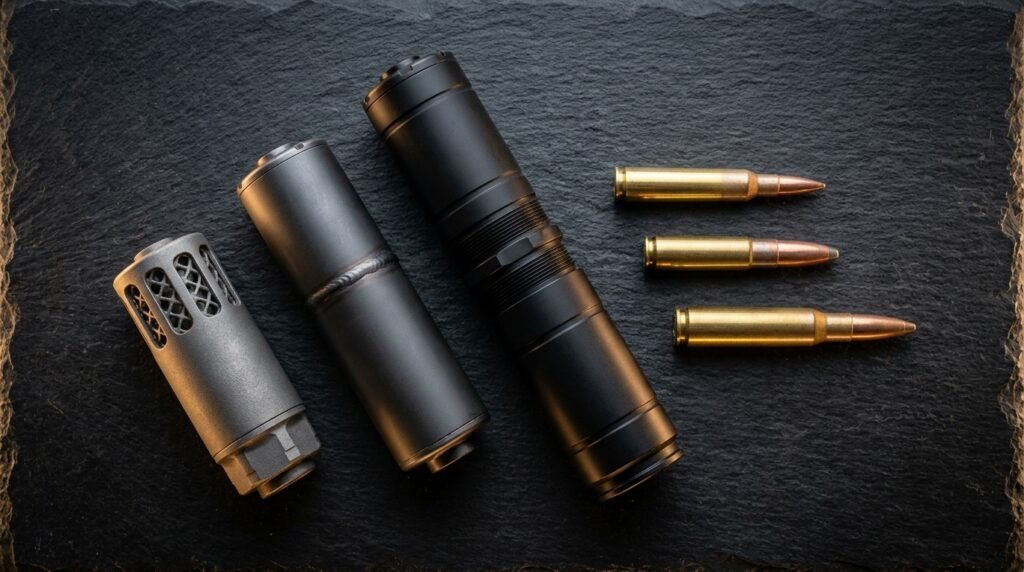
The suppressor market has expanded significantly. Where there used to be a relatively straightforward choice between tube-style welded aluminum or stainless suppressors, there are now 3D-printed titanium options, welded monocore designs, modular stackable suppressors, and more. Each construction type has different pressure ratings, weight profiles, and heat characteristics.
“There are 3D-printed suppressors, welded suppressors, stackable ones. All of those have different pressure readings and specifications that you absolutely want to make sure you’ve got the right one.”
The construction type isn’t just a materials choice – it affects what the suppressor is rated for. A lightweight 3D-printed titanium suppressor and a heavy welded stainless suppressor may both be rated for .30 cal, but their pressure tolerances, heat capacity, and durability under sustained fire can differ significantly.
If you’re running anything approaching a high round-count application – think full-auto rated use, binary triggers, or rapid-fire semi-auto with fast round strings – make sure your suppressor is rated for it.
“If you’re putting too much pressure through a particular suppressor and it’s not rated for it – that could be more than just the suppressor. Nobody wants to destroy their $1,600 suppressor.”
The underlying point is this: the manufacturer’s specification sheet is the document that answers all of these questions. Caliber, firearm type, barrel length restrictions, ammo type testing, pressure ratings – it’s all there. Read it before you buy.
We cover suppressor selection and use across a number of our builds. If you’re looking at running a suppressor on a precision bolt gun specifically, our interview with Zero Compromise Optics touches on how suppressor use affects the full rifle system, and our breakdown of the best steps for accurizing your rifle includes how muzzle devices factor into a complete build. For an in-depth look at how coatings on suppressors and barrels hold up over time, see our coatings primer.
The Bigger Picture: Why These Questions Matter
Each of the four questions in this episode shares a common thread: the answer depends on understanding how the mechanical system actually works, not just following a rule of thumb.
Multi-caliber lowers are versatile by design. Cleaning schedules should be driven by use case and ammunition type, not arbitrary intervals. Muzzle brake compatibility follows a straightforward size rule with one critical caveat. And suppressor selection is a process of matching specifications to your specific application – not a brand decision.
The shooters who get these things right aren’t necessarily more experienced. They’re just in the habit of asking the right questions first.
If you’ve got questions you want answered, drop them in the comments on the video. That’s exactly how this series works – the most common and recurring questions get answered in future episodes. There’s no such thing as a stupid question when it comes to safe and effective use of your firearms.
Subscribe to the 360 Precision YouTube channel and follow us on Instagram for new content, builds, and range footage.