Most people buying their first gun focus on the wrong things: what a friend owns, how it looks, the brand. Our gunsmiths start somewhere else. What do you need it for, what caliber can you afford and control, does it fit you, how easy is it to maintain, and what will the whole setup cost? Here’s how they walk a first-time buyer through each one.
Why Most First-Time Buyers Start in the Wrong Place
Most first-time buyers start with someone else’s needs instead of their own. The host, who works behind a gun store counter, sees it constantly: a first-time buyer walks in a little intimidated and doesn’t know what to do or even what to ask. The questions usually start with “my neighbor recommended this” or “my cousin’s a cop and told me to buy this.”
The gunsmiths’ view is that a first gun shouldn’t be built around what meets other people’s needs. First and foremost, it comes down to what you need, what you’re trying to accomplish, what fits you, and what fits your budget. There are really about five questions that matter most to start with.
Looks aren’t one of them, but they aren’t off limits either. If you want a pink gun, that’s perfectly fine. We once Cerakoted a customer’s firearm Stormtrooper white with pink accents. As the host put it, color is fine as long as the gun meets the criteria below.
1. Start With What the Gun Is For
The foundation of buying your first gun is deciding what you’re using it for, because everything else flows from that. The main purposes the gunsmiths listed are home defense, concealed carry, going to the range for training or plinking, hunting, and competition.
Define your primary purpose first. Then look at which firearm best fills that need, and whether it can fill some others too.
One Gun, Several Jobs: Expect Tradeoffs
A gun doesn’t have to do just one thing, but if it’s mainly for one job, make sure it definitely meets that need. Use it for several things and you might sacrifice something.
The gunsmiths’ example is a buyer who wants one rifle for hunting and competition. That buyer is probably going to end up with something like a 6.5 Creedmoor. It isn’t the best choice for competition, but for whitetail it’s going to be great. Now weight may become a big factor too. The further apart your purposes are, the more you’ll sacrifice one for the other. Something has to give, so one gun won’t serve several purposes perfectly.
Some purposes do overlap well. A short-barreled semi-auto rifle can still be used for target practice, depending on the distance. A 12.5-inch or 14-inch barrel will shoot out to five or six hundred yards easily.
2. Pick a Caliber You Can Afford to Shoot and Control
Once you know the purpose, the next decision is caliber, and two things drive it: what the ammunition costs and how much recoil you can control. If it’s your first gun, pick a caliber that fits you as a first-time buyer and fits your purpose.
Ammo Cost Adds Up Fast
Ammunition cost is a big factor if you plan to shoot a lot. Braxton’s example is 300 Blackout, a great home defense gun whose ammo costs two to three times as much as .223 at the range. If you want to shoot a thousand rounds a month, that cost becomes a big factor, especially if you don’t reload.
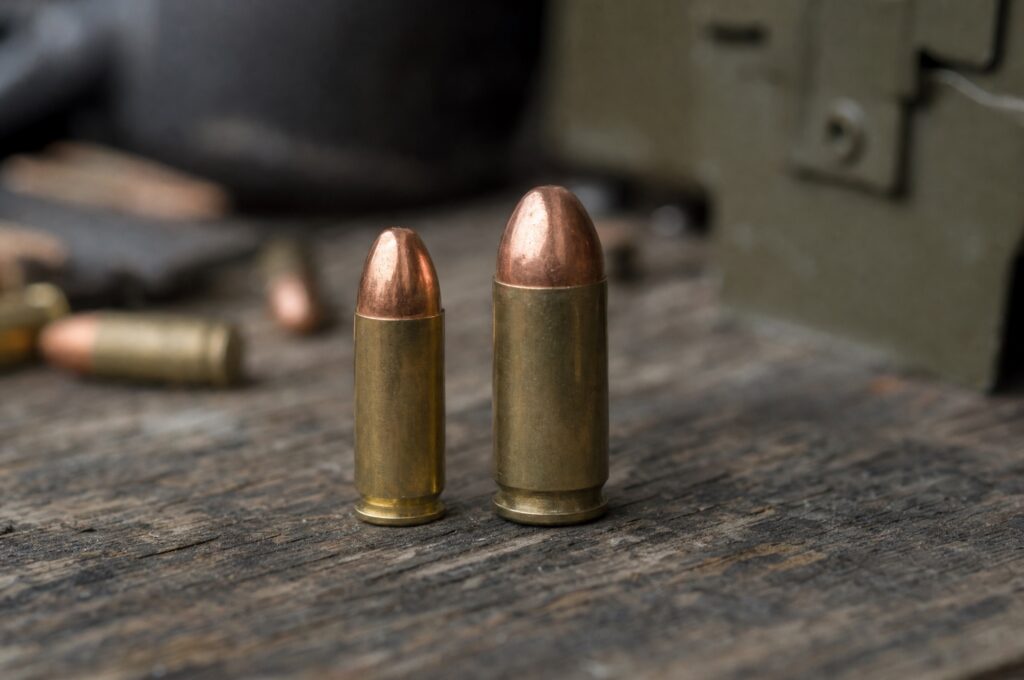
You could buy the exact same configuration, an 8-inch .223 or an 8-inch 300 Blackout, and one will simply cost you more to feed. So it goes back to purpose. If the gun is truly for home defense with a suppressor, and you want it quiet and maneuverable, 300 Blackout fits. You’re not dropping a thousand rounds a month through it. You might put 50 rounds a month through it to stay proficient and make sure it stays zeroed.
Bigger Isn’t Always Better: Recoil and Bad Habits
Recoil management is the question that comes up all the time. People think bigger is better, and it isn’t always. The real question is whether you can control it.
Going from a .45 ACP to a .380 is a huge recoil difference. For most people in general, a .45 is probably not the gun to put in their hands the first time they shoot. Too much recoil builds bad technique: you start worrying about the recoil, flinching, and driving the gun, and you won’t be as accurate.
Physical ability matters too. As the host sees it from selling and training, some people are naturally stronger than others depending on age and body strength. A person who works out may handle a caliber that someone similar but less active can’t. It takes wrist strength, muscle and fitness to handle a gun, so you need to know that about yourself.
The Same Rule Applies to Rifles
The same problem shows up in rifles. A buyer might want a 300 Win Mag or a .338 Lapua to shoot long range, in a rifle light enough to carry into the woods. Anyone who has shot a lightweight 300 Win Mag or .338 Lapua knows it isn’t pleasant, and anticipating that recoil builds the same flinch.
You don’t need a .338 Lapua for long range, especially if you aren’t hunting game animals at long range. You can take a 6 Creedmoor out to a mile; we’ve done it, and it works just fine. The 6.5 Creedmoor you’d hunt with can shoot a thousand yards easily too.
The gunsmiths also came across a manufacturer promoting a 300 Win Mag pistol with an 8-inch barrel, a pistol brace and a muzzle brake. Their reaction: you can buy whatever you want, but they wouldn’t want to be anywhere near it. Sometimes you just want something, though. Dan bought a .50 cal and learned the lesson the hard way: it cost a lot, including a shoulder plate after a broken collarbone. For a first gun, pick something that fits you and your purpose.
Why 9mm Is the Usual First Pistol Caliber
For most first-time buyers, the gunsmiths point to 9mm. The ammunition is inexpensive and readily available. If a gun shop doesn’t have 9mm, unless there’s a shortage on, go to a different gun shop.
Reloading, Brass and Factory Ammo
If you plan to reload, for competition for example, check how readily available the brass is. There have been shortages of brass and primers over the past few years, to the point that shooters couldn’t shoot before a competition. Sometimes it’s nice to be able to just buy factory ammo.
3. Make Sure It Fits You
Fit and comfort come next, and they’re personal. What Braxton likes might not be what the other gunsmiths like, and what they like might not be what you like.
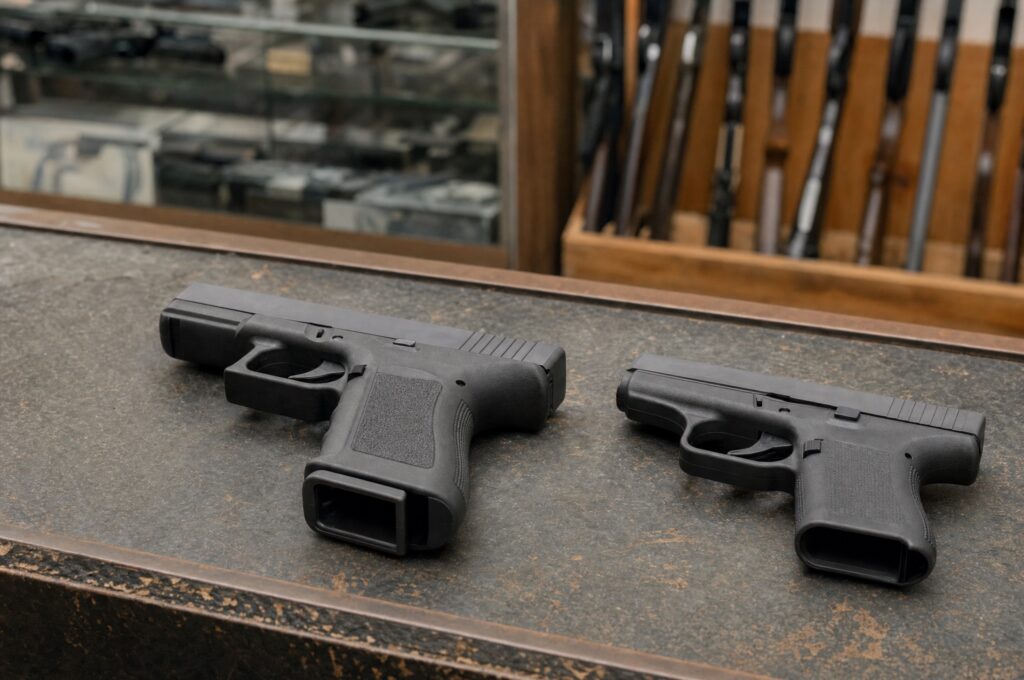
Pistols are especially sensitive to ergonomics. Some people love Glocks; some can’t shoot them because of the grip angle or the way the grip feels. Fit on a handgun can make or break the way you shoot it. The host puts it this way: buying a firearm is like buying a pair of shoes. What works for Dan isn’t going to fit everyone, even if Dan shoots it amazingly accurately.
Grip, Trigger Reach and Length of Pull
The fit factors are grip size, ergonomics, the trigger, and length of pull. Length of pull is especially big on shotguns, because shotgun lengths of pull vary a lot.
You want to reach the trigger without overstretching. If you’re stretching to get your finger in there, you’re going to pull it to the right every time, you’ll have trouble shooting it, and you won’t like what you bought.
Weight and Balance
Weight and balance is another big part of ergonomics, and it depends on how you’ll use the gun. Are you walking to a tree stand and sitting all day, or hiking several miles through the mountains after elk? If you’re carrying it, it had better be light, because every ounce gets multiplied by the hours you carry it.
Bird hunting clearly shows why weight matters. A shotgun might weigh only six or six and a half pounds, but carried up and down a field for a couple of hours, it gets heavy. The difference between six and a half pounds and eight pounds is only a pound and a half. Hold it for two hours and you’ll know the difference, and why lighter shotguns are made for bird hunting. Know your own physical fitness and limitations.
If You Don’t Like It, You Won’t Train With It
If you don’t like the gun, you won’t train with it, you won’t shoot it, and you won’t be disciplined with it. At that point it’s just a waste. In the host’s experience, spending around $600 on a pistol and then not liking it, not being comfortable shooting it, or not being able to find or afford the ammo won’t help you. Find the one that works for you, not the one that works for someone else.
4. Know How Easy It Is to Maintain and Repair
How easy the gun is to maintain is the fourth thing to weigh: how often you’ll have to clean it and how simple it is to take apart. It also depends on whether you’re mechanically inclined and how easily you learn to take things apart.
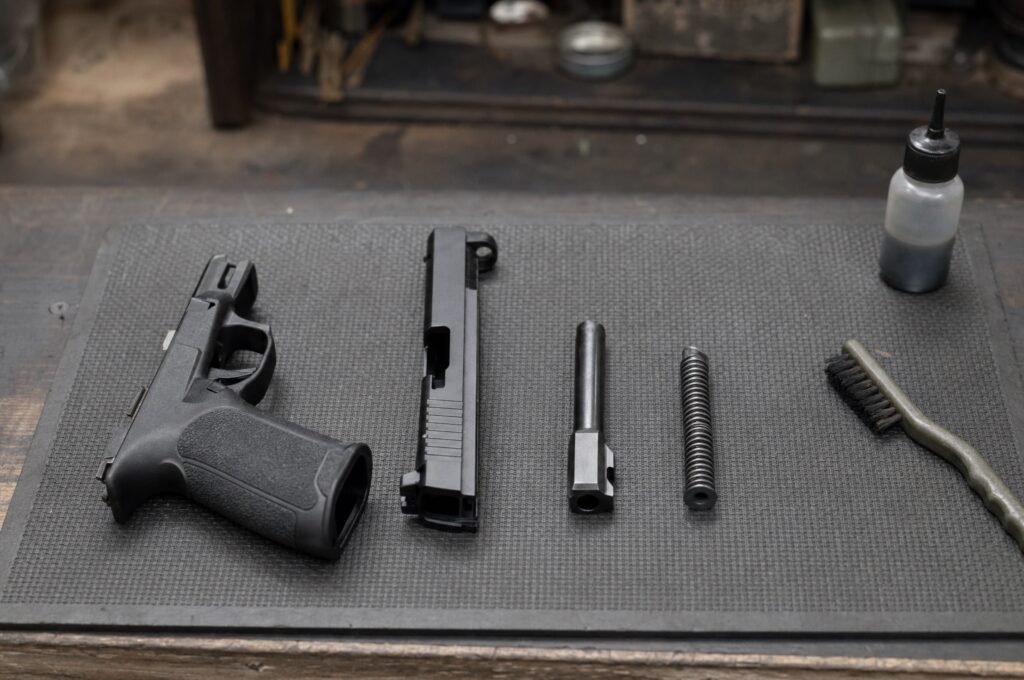
Braxton can take a Glock apart with eyes closed: pop the slide off, pull the spring, pull the barrel, clean it, and slap it back together. Anyone who has fully disassembled a Beretta 92 knows there are springs and detents everywhere, which makes it a pain to take apart. 1911s are a little more complicated, but not as bad.
How Dirty It Gets and How Often You’ll Clean It
A semi-auto rifle run with a suppressor gets dirty, because there’s more gas and more back pressure. A dirty gun won’t function properly, so decide how often you’re willing to clean it and how much you want to put up with.
Shooters differ a lot here. Some guys at a shotgun club clean the gun, go shoot it, come back, clean it, and put it away, every time. Others shoot and shoot until the gun starts having problems. Caliber plays in too: most 300 Blackout shooters run subsonic ammo, which is notoriously dirty because it doesn’t burn fully. That leaves unburnt powder everywhere, so you’ll clean it more often than something like a .223.
Reliability and Finding Parts and Service
For a first firearm, the gunsmiths steer away from something very complex and difficult to service, like a Beretta. If something happens to it, you won’t be able to take care of it yourself, and you’ll be searching for someone to fix it.
Glock-pattern pistols and AR-15s have interchangeable parts and are easy to work on. You can walk into almost any gun shop for help with a problem or to replace a trigger, and they stay compatible with a lot of other parts, so you have choices. That support matters, because there aren’t a lot of gunsmiths left. A complicated firearm might have to go back to the factory or to a gunsmith three states away. Gunsmithing is becoming a dying art, and it’s getting harder to find anyone, never mind a good one.
5. Set a Total Budget, Not Just a Gun Price
The last thing is budget, and the number to plan around is the total cost of the setup, not just the price of the gun. The host regularly hears first-time buyers say they want something cheap because it’s “just for protection.” The host’s reaction: you’re talking about your life.
Good firearms don’t have to be expensive. The gunsmiths point to Glocks and some CZs, like the P-09 and P-10, which you can get for $400 to $500 and which are super reliable. What you don’t want is a $150 budget pistol you can’t trust your life with. You need something that works every time you pick it up.
“Cheap” also isn’t a fixed number. What’s cheap to one of our gunsmiths isn’t cheap to Braxton. To one buyer, cheap might mean $2,000, while most people are talking about $300, and every once in a while someone walks in ready to spend five or six grand. Define your actual budget range.
What the Gun Price Doesn’t Include
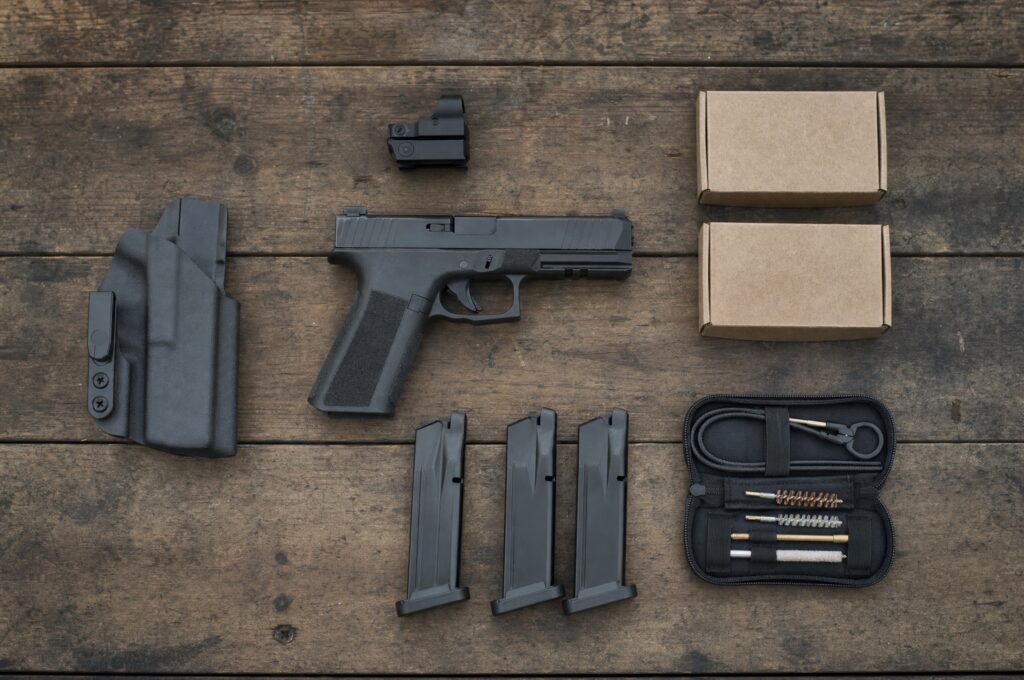
Knowing your total budget is the most important part, because the spending doesn’t end with the gun. The gunsmiths’ list of what comes next:
- A red dot or other optic
- Ammunition
- Additional magazines (a gun may come with one or two)
- A holster, if you’re going to carry it
- Cleaning gear
- Training
They highly recommend that newer shooters get training from someone proficient in whatever they plan to shoot. Add it all up and a $600 Glock can easily become a $1,200 or $1,500 Glock by the time you’re done. Plan for that up front, and don’t blow your whole budget on just the gun.
First Gun Checklist and Total Budget
Work through the five questions our gunsmiths start every first-time buyer with, then add up what the whole setup will cost. It won’t pick a gun for you. In their words, the right one is the one that fits you.
The five questions
Total budget worksheet (enter your own prices)
General information from our Ask the Gunsmith episode, not a recommendation for your situation. Nothing you enter here leaves your browser. Questions? Talk to our team.
Buy Once, Cry Once (and Why Expensive Isn’t Always Right)
One of our gunsmiths is a big fan of “buy once, cry once.” The host sees why almost every day at the store: buyers try to save money, end up spending more, get disappointed, and have to start all over again.
Spending more doesn’t automatically mean the right gun, though. A higher-priced gun isn’t necessarily good for concealed carry. The gunsmiths all love 2011s, but in Braxton’s words, 90% of them are what they’d call a Series 70, and they are not drop safe. You don’t want to be carrying a gun that isn’t drop safe.
The Bigger Picture: Try Before You Buy
The best first gun isn’t the coolest gun, or what your neighbor or your cousin recommends. It’s the one that works for you, once you’ve weighed budget, functionality and caliber.
The host’s recommendation is to get a lesson on handling a firearm first, then get some training, and try a few guns before deciding. Otherwise you’re going to be disappointed, spend money for nothing, and end up selling it back to the store. Go to a gun shop and pick up a bunch of different guns, especially handguns, to see how they feel. If the store has a range, rent the gun, shoot it, and see how it fits you. Don’t buy your first gun on a whim. It should fit like a shoe.
Buying Your First Gun FAQ
The gunsmiths start with five things: what the gun is for, a caliber you can afford to shoot and control, how well it fits you, how easy it is to maintain and repair, and your total budget. Purpose comes first, because every other decision flows from it.
There isn’t one best first gun for everyone. The right one is whatever fits your purpose, your hands and your budget, not the coolest gun or what your neighbor owns. Buying a firearm is like buying a pair of shoes: what fits someone else may not fit you, so try a few before deciding.
For most first-time buyers, the gunsmiths point to 9mm. The ammunition is inexpensive and readily available. If a gun shop doesn’t carry 9mm, outside of a shortage, they suggest going to a different shop.
For most people in general, a .45 ACP is probably not the gun to start with. Compared with a .380 it’s a huge recoil difference, and too much recoil builds bad habits: worrying about the recoil, flinching, driving the gun, and losing accuracy.
Plan around the total, not the gun price. Optics, ammo, extra magazines, a holster, cleaning gear and training all add up. In the gunsmiths’ example, a $600 Glock can easily become a $1,200 to $1,500 setup, so don’t spend your whole budget on the gun alone.
Inexpensive is fine; untrustworthy isn’t. Glocks and CZ P-09 and P-10 pistols run $400 to $500 and are super reliable. A $150 budget pistol is a different story, because a home defense gun has to work every time you pick it up.
The gunsmiths highly recommend that newer shooters get training from someone proficient in what they plan to shoot. The host suggests getting a lesson on handling a firearm, then training, and trying a few guns, including renting them at a store with a range, before you buy.
It means paying for the right gun up front instead of saving money on the wrong one. The host sees buyers try to save money, end up disappointed, and spend more starting over. Spending more isn’t automatically right either: Braxton notes that most 2011s are not drop safe for carry.
Have a Question for the Gunsmiths?
Ask the Gunsmith runs on your questions, so keep sending them in the YouTube comments or by message on social media, or send them to us directly. If you’re ready to try a few before buying, our dealer locator can help you find a shop near you.
Related Reading
- Your Gunsmith Questions, Answered Straight
- Joe Gentile: The Biggest Mistakes New Shooters Make (and How to Avoid Them)
- Hunting for the Best Rifle
- Single-Stage vs Two-Stage Trigger, and What Actually Matters in an AR-15
Everything above reflects the personal setups and opinions of the gunsmiths in this video and is provided for general information only. It is not instruction, and it is not a substitute for safe firearm handling, the rules of your range, or the rulebook of the match you are shooting. Always confirm the legal status of suppressors and any other regulated component in your jurisdiction.